Blog/Research
Misinformation in the Age of AI
The introduction for this white paper is presented below. The full white paper can be downloaded here.
Last summer, we at Focaldata produced a report on why support for overseas aid had declined over recent decades. In analysing some of the open-text survey responses gathered during the fieldwork process, I was struck by the extent to which people’s false perceptions of aid cropped up: where it went, who it went to, and how much was sent.
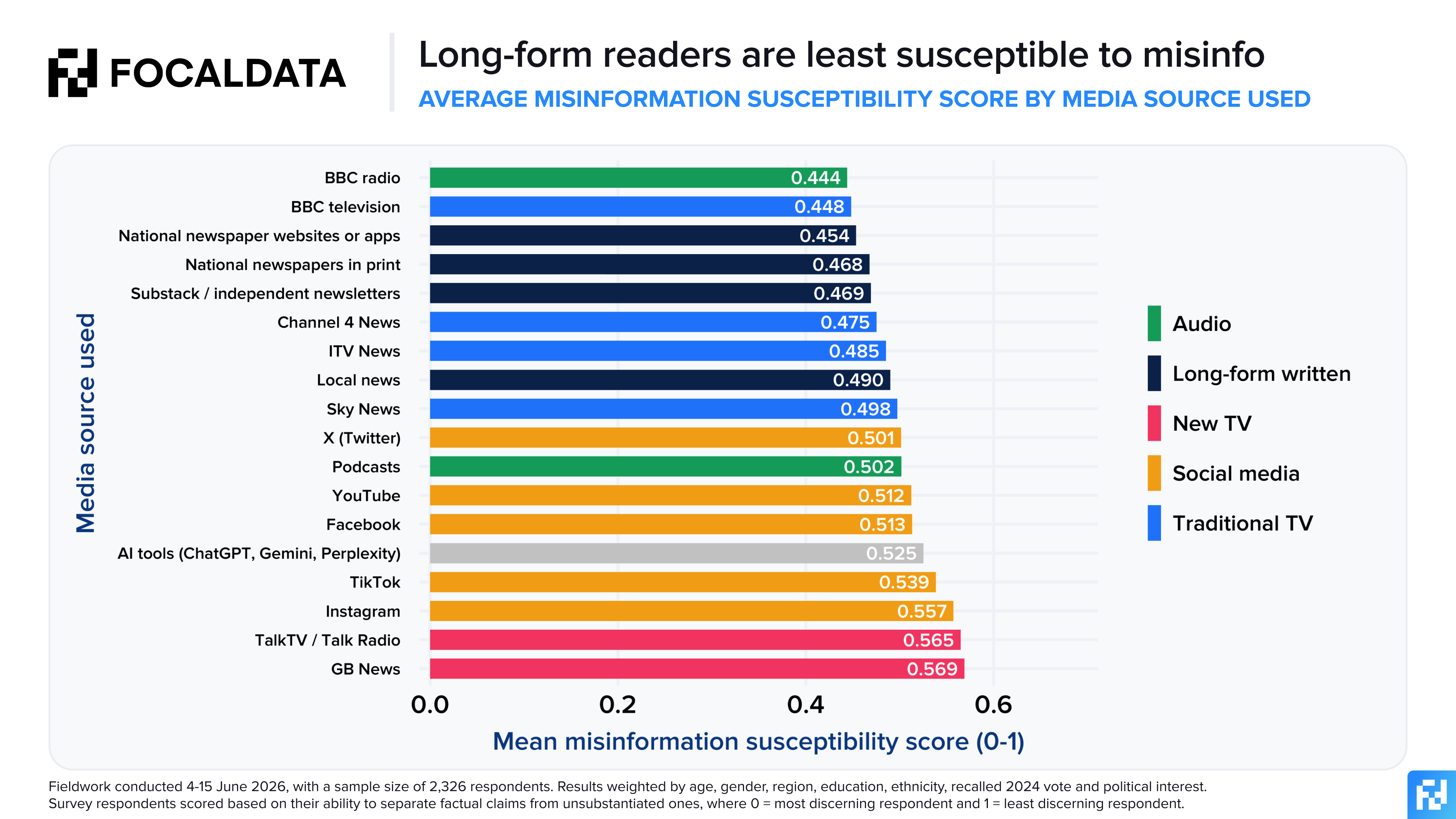
A decade on from the initial explosion in the debate around misinformation, the problem shows no sign of receding. Many of our clients in the non-profit and media spaces tell us that misinformation remains one of the biggest challenges facing their sector. So how did we get here? Weren’t ‘fact checkers’ supposed to solve everything?
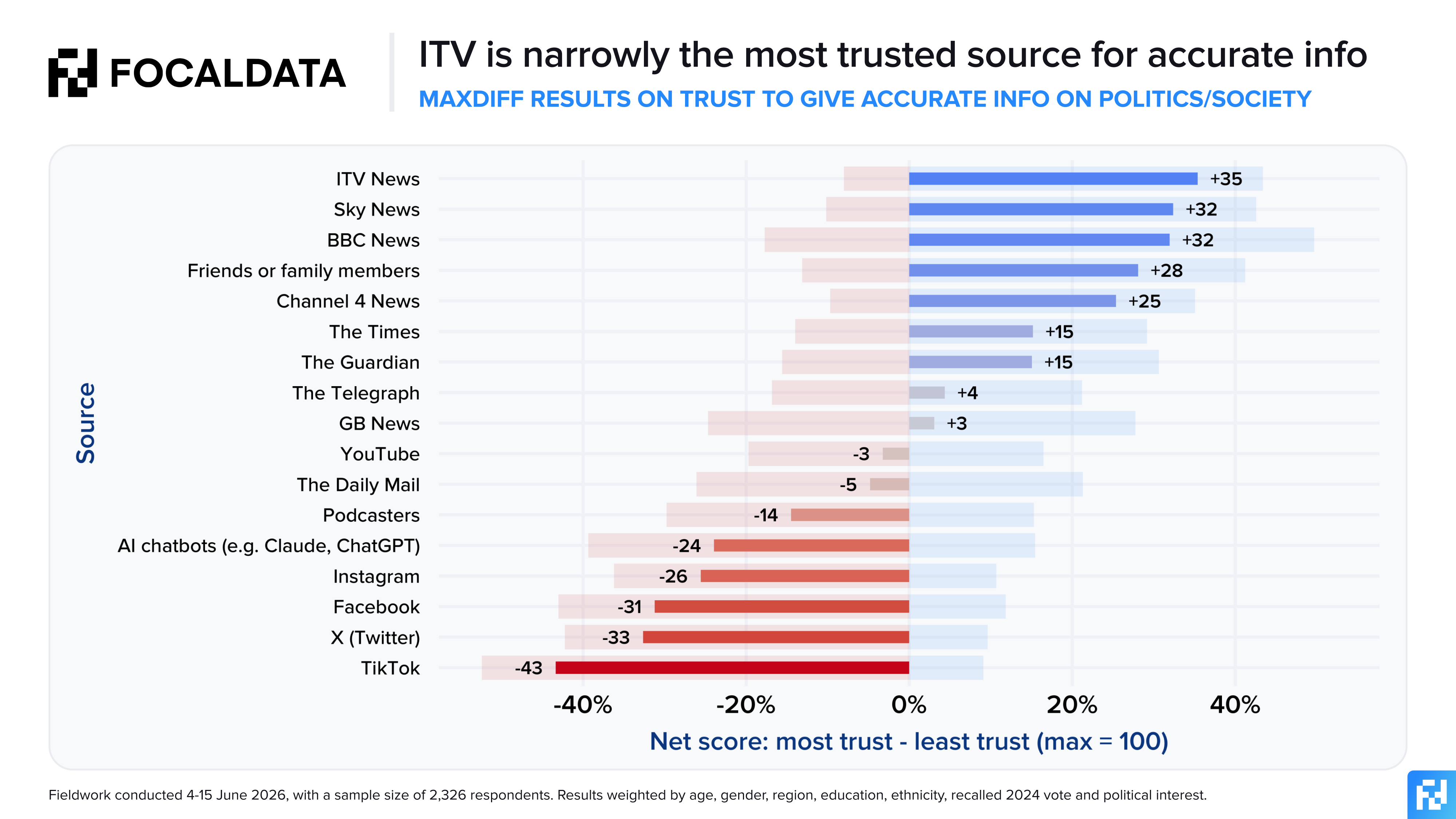
The purpose of this white paper is to understand the misinformation problem as it exists today, beginning with a retrospective on attempts to counter misinformation over the last 10 years, before exploring the drivers of misinformation susceptibility in an evolving media landscape, scoping a typology of misinformation, modelling how different claim types and rhetorical techniques can have outsized negative impacts on vulnerable sectors, and finally looking ahead to how AI is likely to transform the debate over the coming decade.
We set out to test two hypotheses with this research, both of which have been borne out by the findings. The first is a slightly provocative stance, that mainstream attempts to counter misinformation over the last decade – through fact-checking, content labelling, and other methods – have fallen short in their (noble) goals of reducing the amount of misinformation people encounter and their susceptibility to the problem when it does arise. This is covered in the Checked Out chapter of this report. As such, a new paradigm is needed.
The second is that certain kinds of claims are more effective at dealing damage to vulnerable industries like charities and the healthcare sector, particularly ‘truth-adjacent’ and ‘false generalisation’ claims which are themselves untrue or unprovable, but draw upon real facts and kernels of truth.
In order to test this second hypothesis, we designed an experiment in which survey participants were shown a variety of claims on a sliding scale of truthfulness – ranging from neutral facts to plainly false claims – and asked to rate their perception of each claim’s truthfulness, how a claim would change their views on a particular sector or group if it were true (impact), and how likely they would be to share it if they believed it to be true (virality). We covered three main problem areas in which misinformation has been particularly prevalent in recent years: charities, healthcare, and migration.
The aim of this report is not to engage in a partisan diatribe about one side of the political spectrum peddling misinformation while the other side bravely fights in pursuit of truth and reality. We tested claims spanning the political spectrum, through which we found that susceptibility to false beliefs was prevalent across the left-right divide.
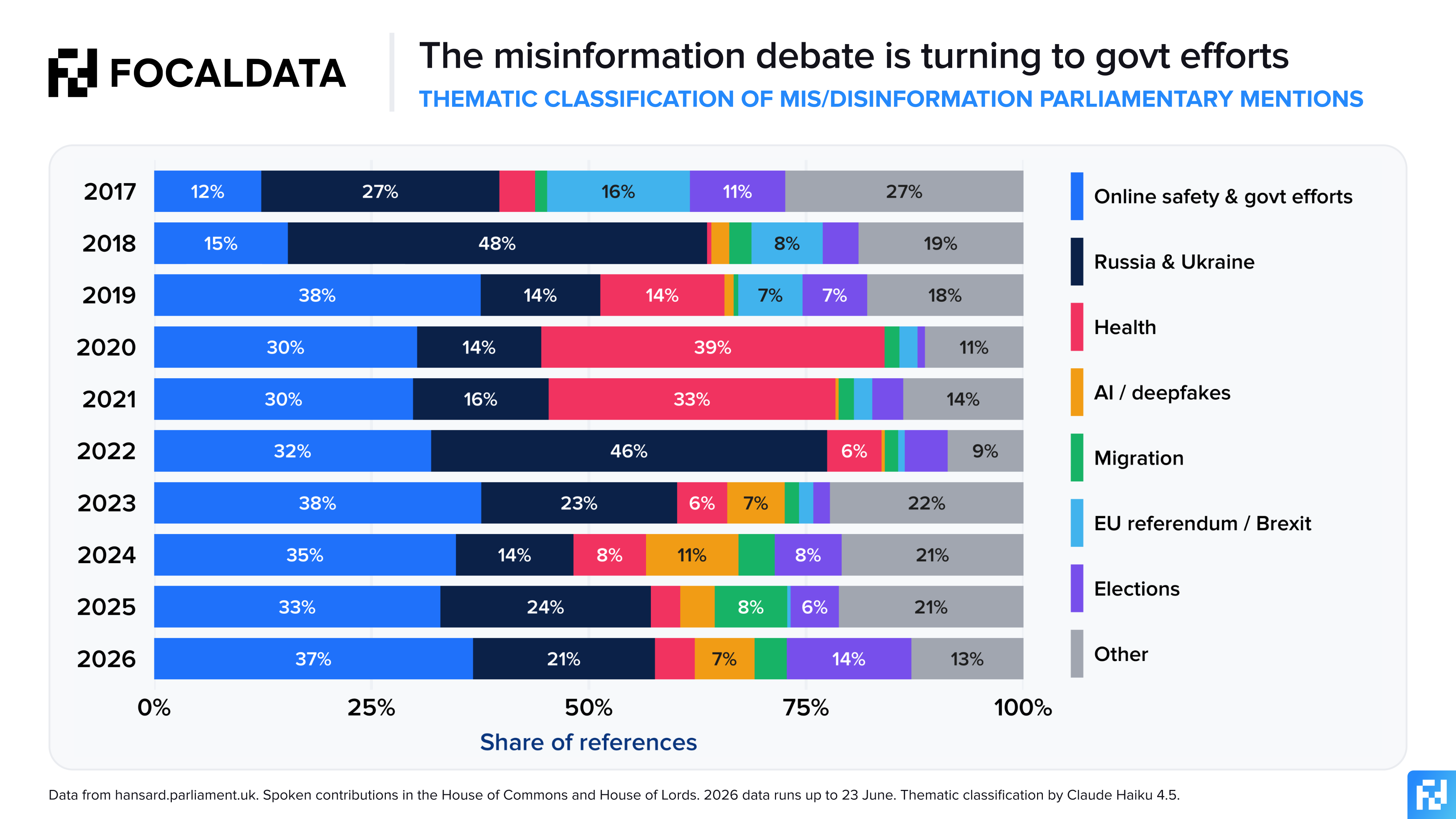
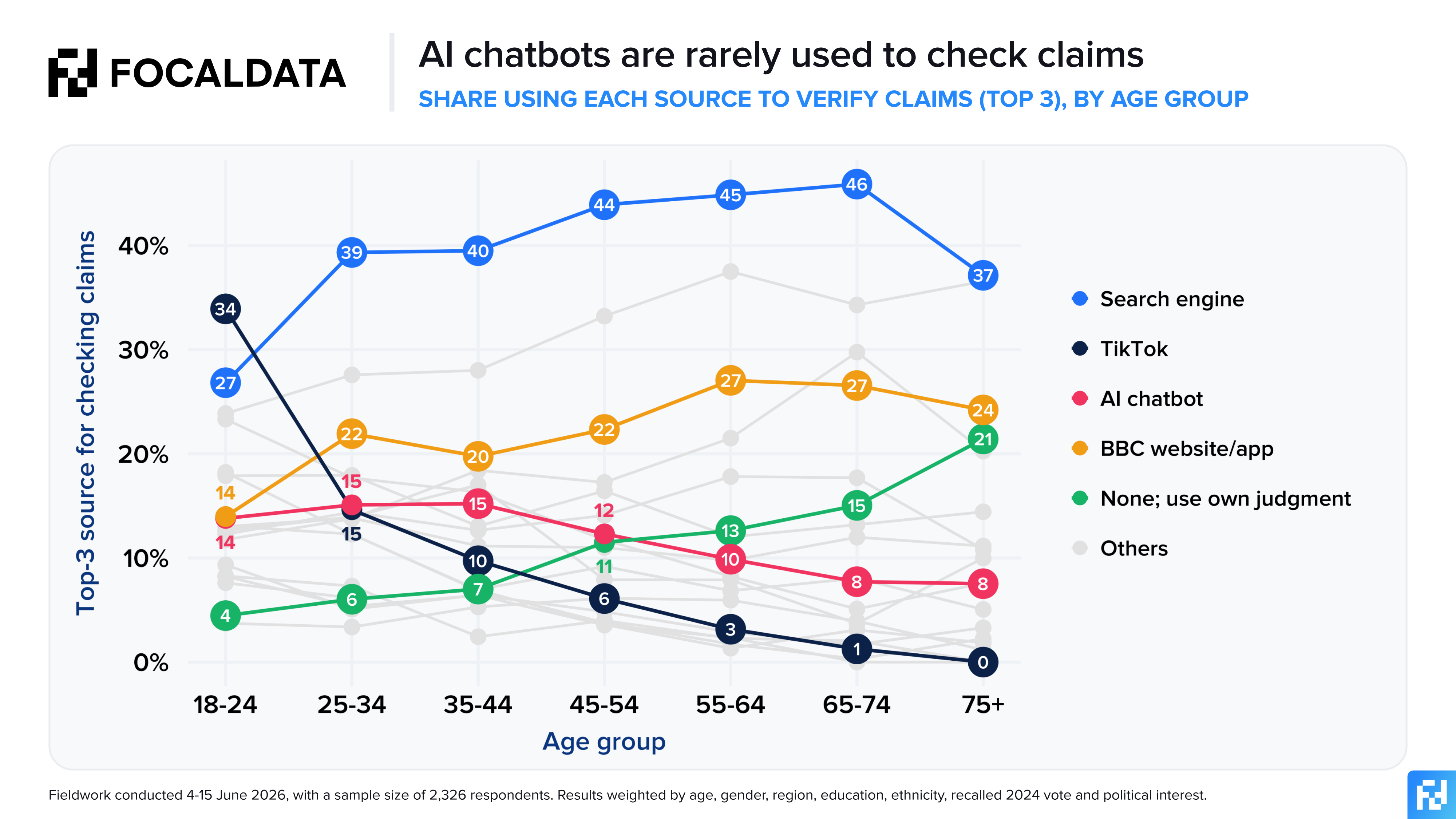
Artificial intelligence could now pull misinformation in several competing directions at once. The increasing sophistication of AI-generated deepfake images and videos may break the boundaries of reality and fiction entirely, or the growing use of AI chatbots for claim verification and subject research could result in a depolarised and more informed populace. Our data indicate that both of these paths are likely to see the age curve of susceptibility to misinformation reverse, with misinformation becoming a much larger problem for older generations, sparking questions about how the problem is resourced going forward. The government’s recent social media ban for teens was driven at least in part by concerns around social media misinformation, but perhaps this is a backward-looking strategy for the late 2010s rather than a solution fit for the 2030s.