Blog/Research
Britain's Digital Future: A new white paper from Focaldata
We are delighted to announce the release of our latest white paper, Britain's Digital Future: Why digital sovereignty could become the next major political divide.
The executive summary follows, but you download the full white paper at the download link below.
Executive summary
Digital sovereignty – the idea that a country should control how its data and digital systems are managed, and have the power to regulate both under its own laws – is not widely recognised by the UK public. In an era of fraught geopolitical tensions and discussions around the burgeoning ‘AI Cold War’, however, it may well be one of the defining economic and political questions of the next decade.
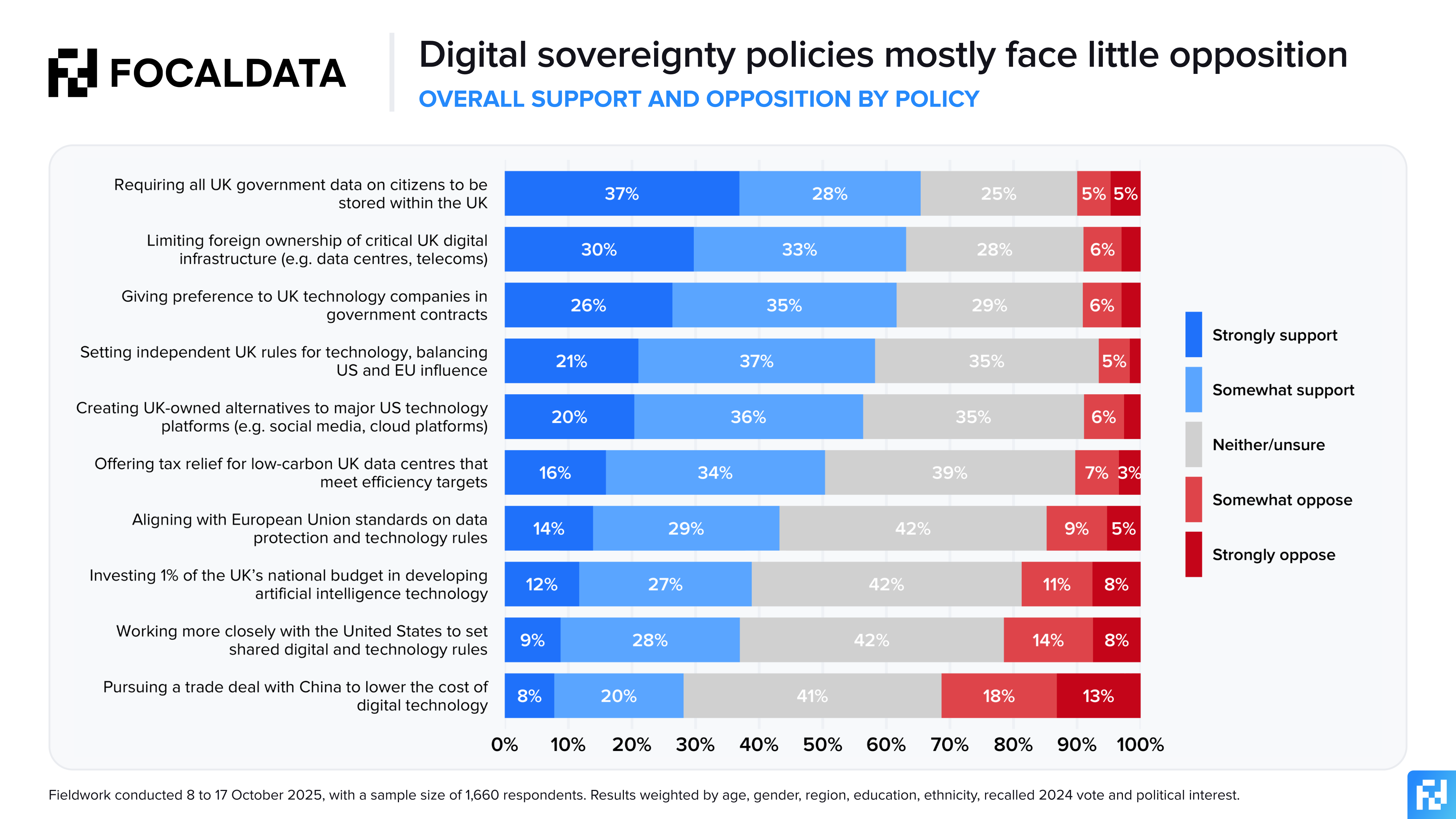
While direct awareness is low, we have uncovered evidence that the underlying policy choices digital sovereignty encompasses could have large impacts on the outcome of future UK elections. We find consistent public preferences for policies that limit foreign ownership of digital infrastructure and assert national rules independent of major United States or European Union influences, with these preferences emerging as more important drivers of voting behaviour than views on existing major political issues like migration, climate change and the NHS.
The country possesses a broad inclination towards digital protectionism and economic nationalism, in which voters value tech autonomy as an extension of national security and sovereignty. Free-market campaigners will need to work hard to overcome this.
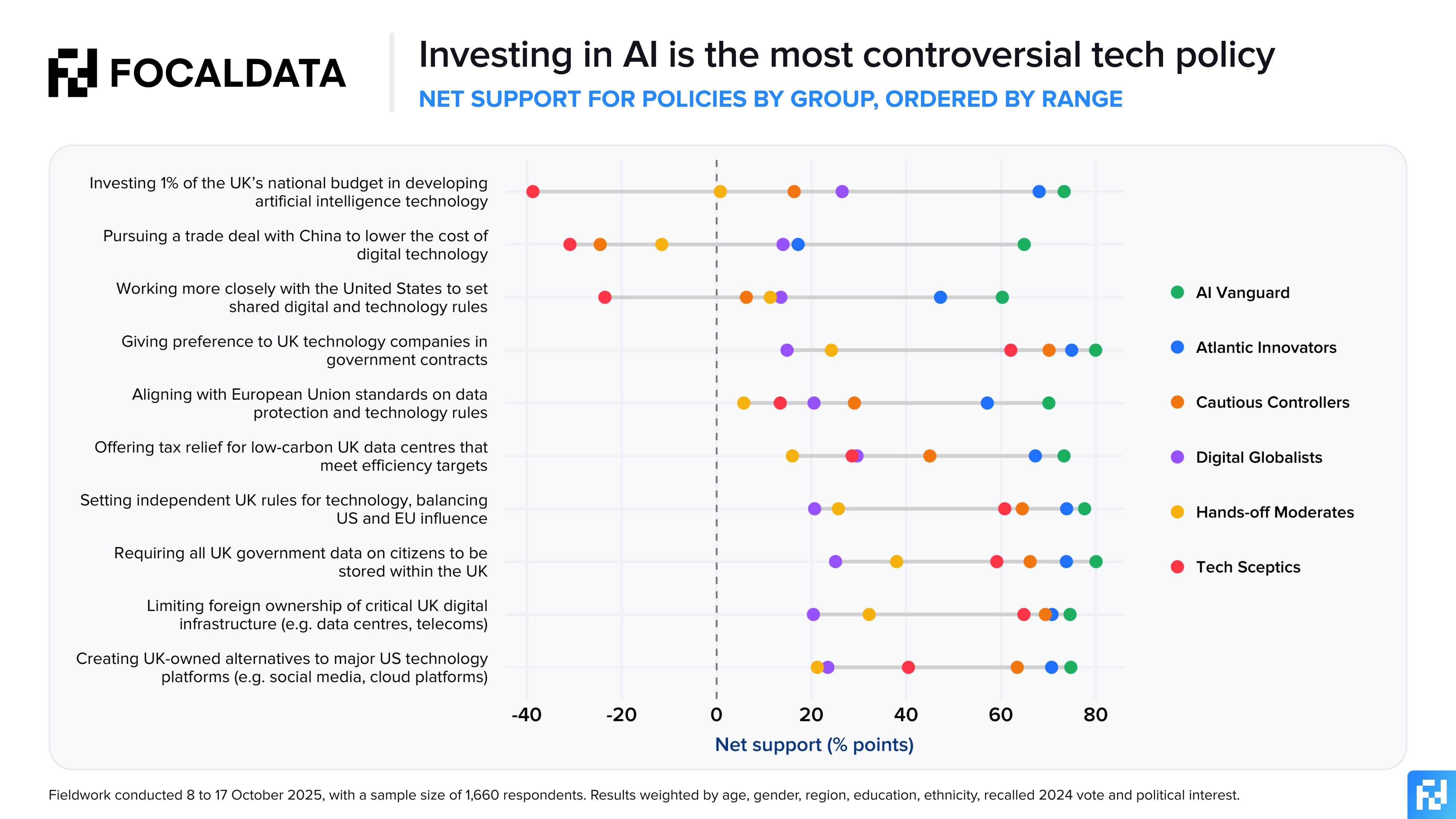
Based on an attitudinal segmentation, we have identified six distinct groups within public opinion, differentiated by their views on technology, AI, and the state’s role in regulation of digital assets. These groups are Atlantic Innovators, Digital Globalists, Cautious Controllers, Hands-off Moderates, Tech Sceptics and the AI Vanguard.
Generally speaking, technology firms are more trusted than governments to act in the UK’s best interests, but US-based companies face reputational challenges linked to distrust of the US government. This is a new situation emerging in the Trump 2.0 era, serving as the cornerstone for why pro-US messages are often seen as unpersuasive and can backfire among key swing audiences.
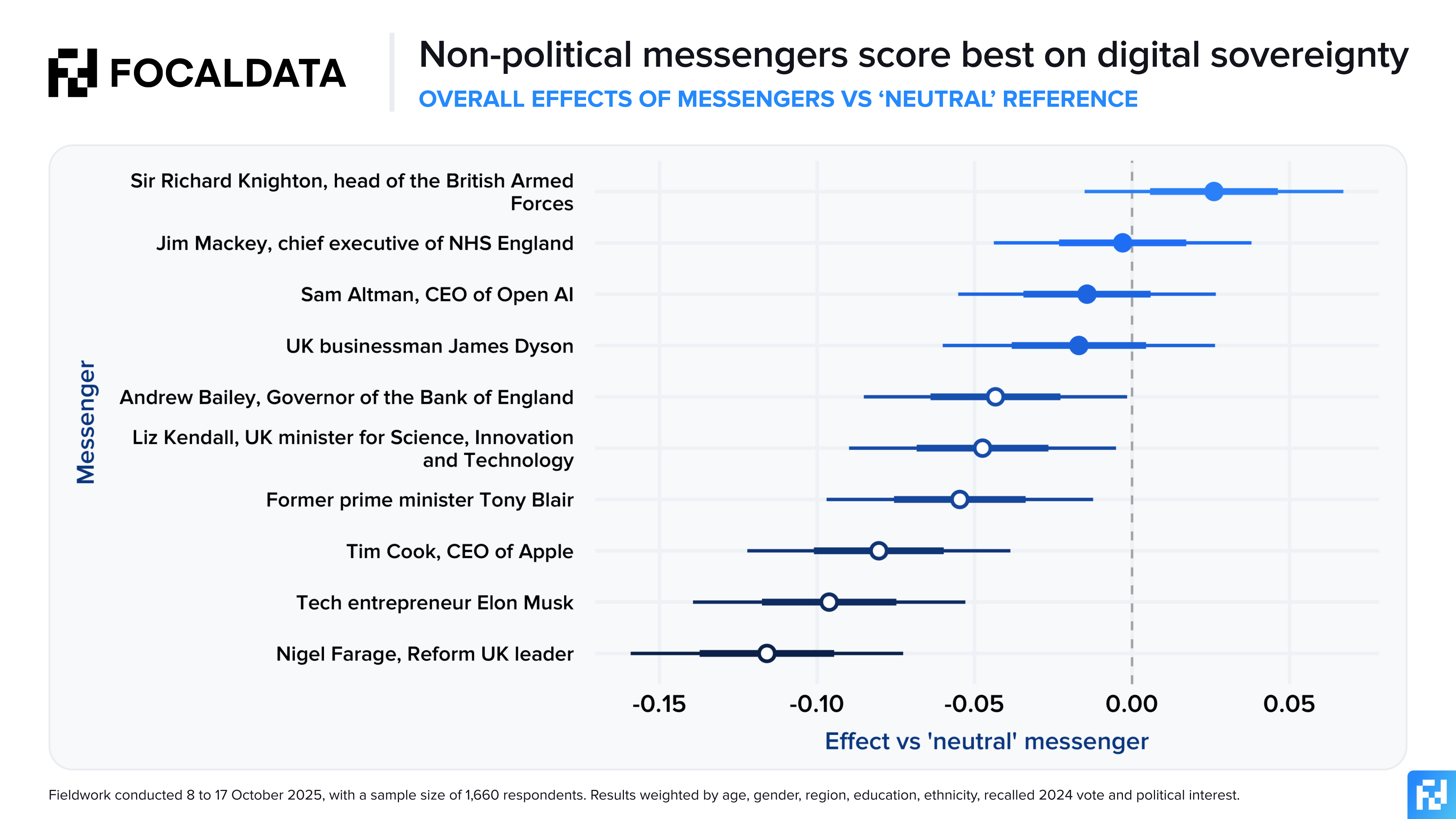
Our analysis also highlights the power of messengers in shaping nascent digital sovereignty narratives, which in some cases are as important as the messages themselves. We observed a 14-point gap between the most- and least-effective messengers in our data. In a world where views on digital sovereignty are not yet fixed, campaigns will benefit from placing particular emphasis on who is communicating their messages. US tech magnates and UK-based politicians tend to undermine message credibility, while domestically-rooted, somewhat apolitical figures from trusted institutions like the army, NHS or British business consistently strengthen public support.
Taken together, our findings show that digital sovereignty could soon become a potent but malleable political faultline. While few voters could define it, many already have strong instincts about what it should mean, and those instincts will matter for the UK’s future digital, economic and foreign policy strategies.