Blog/Research
Mapping the New Geopolitical Axis: A new white paper from Focaldata
We are delighted to announce the release of our latest white paper, Mapping the New Geopolitical Axis: How Trump's second term is reshaping global alliances, and how Europe may respond.
The introduction follows, but you download the full white paper at the download link below.
You can also explore our interactive geopolitical dashboard here.
Introduction
The second presidency of Donald Trump has brought US global strategy back to the forefront of the news cycle. The United States’ National Security Strategy document, published in November 2025, made clear the administration’s goals to “restore American preeminence in the Western Hemisphere, and to protect [...] access to key geographies throughout the region”.
This expansionist approach to foreign policy, nicknamed the ‘Donroe Doctrine’, envisions a bipolar world order in which the United States asserts itself as the dominant player in the Western Hemisphere, countering China in the East.
The US has already taken action in Venezuela and threatened intervention in a number of other countries including Greenland (a threat later walked back, at least publicly). Danger perceptions are rising across the world. In the UK, US and France, at least three in five adults now say they are ‘very much’ or 'a good deal’ worried about a war involving their country.
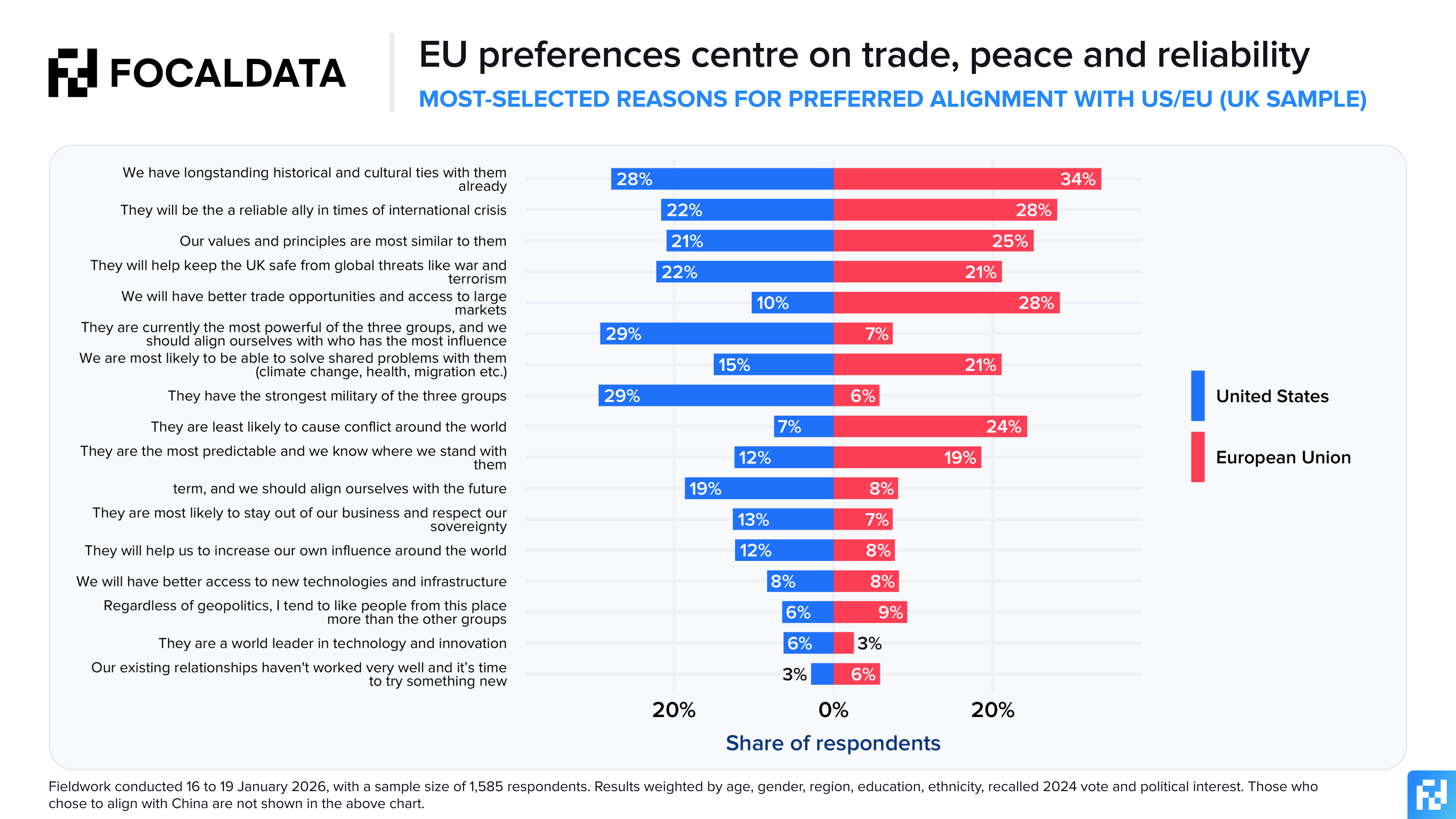
Recent actions have accelerated a reckoning in Europe about how the continent sees itself in the world and positions itself for the future, with United States alliance no longer assured in an era of ‘America First’ foreign policy. Alignment with China is widely agreed to be off the cards, and new survey data confirms this is not merely elite opinion. Just 4% of British respondents and 7% of those in France favour alignment with China over the European Union or United States. That leaves two potential paths: continue to align with the United States, or reject the idea of a bipolar axis entirely and attempt to build a rival third sphere of influence centred on Brussels.
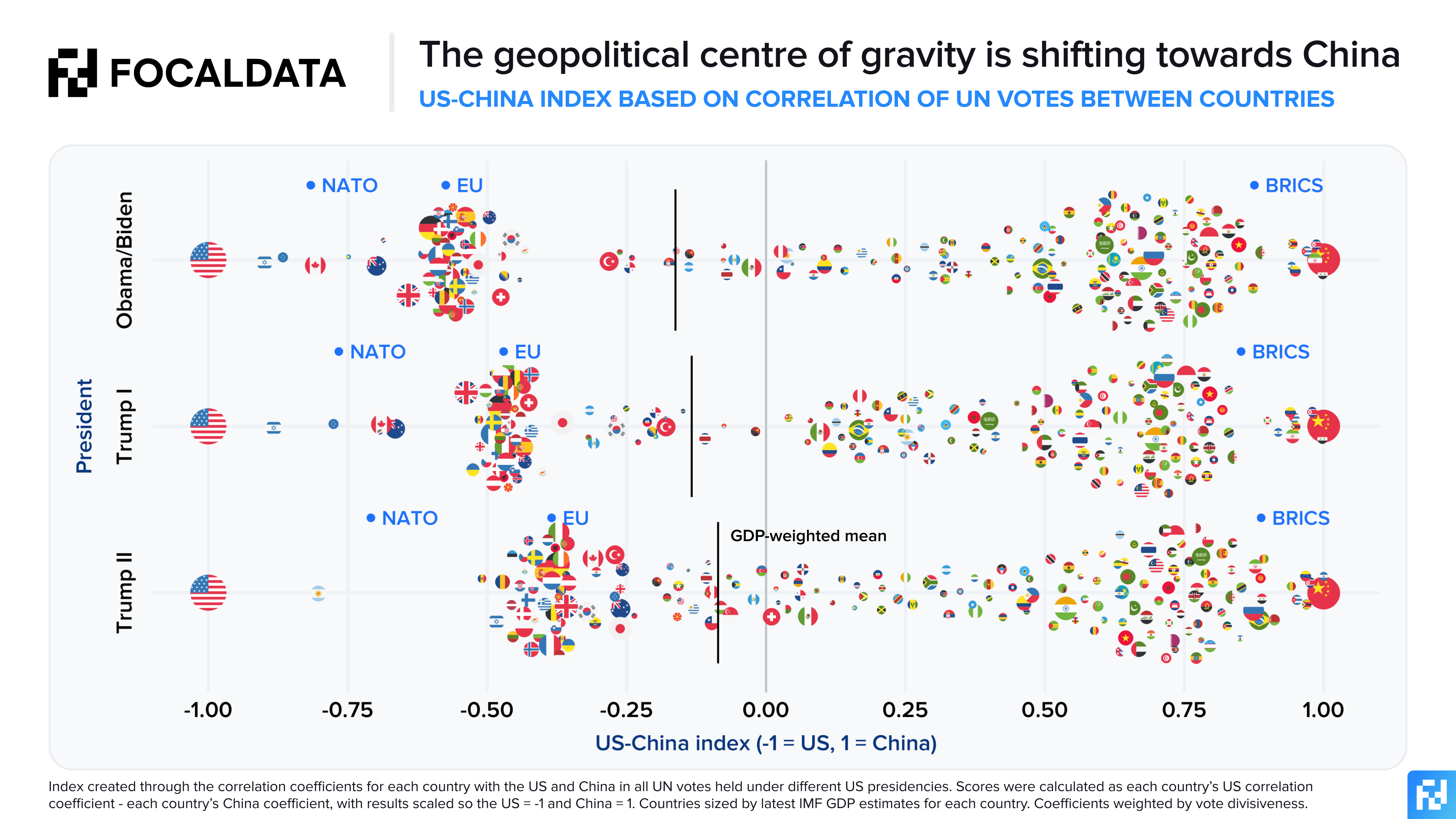
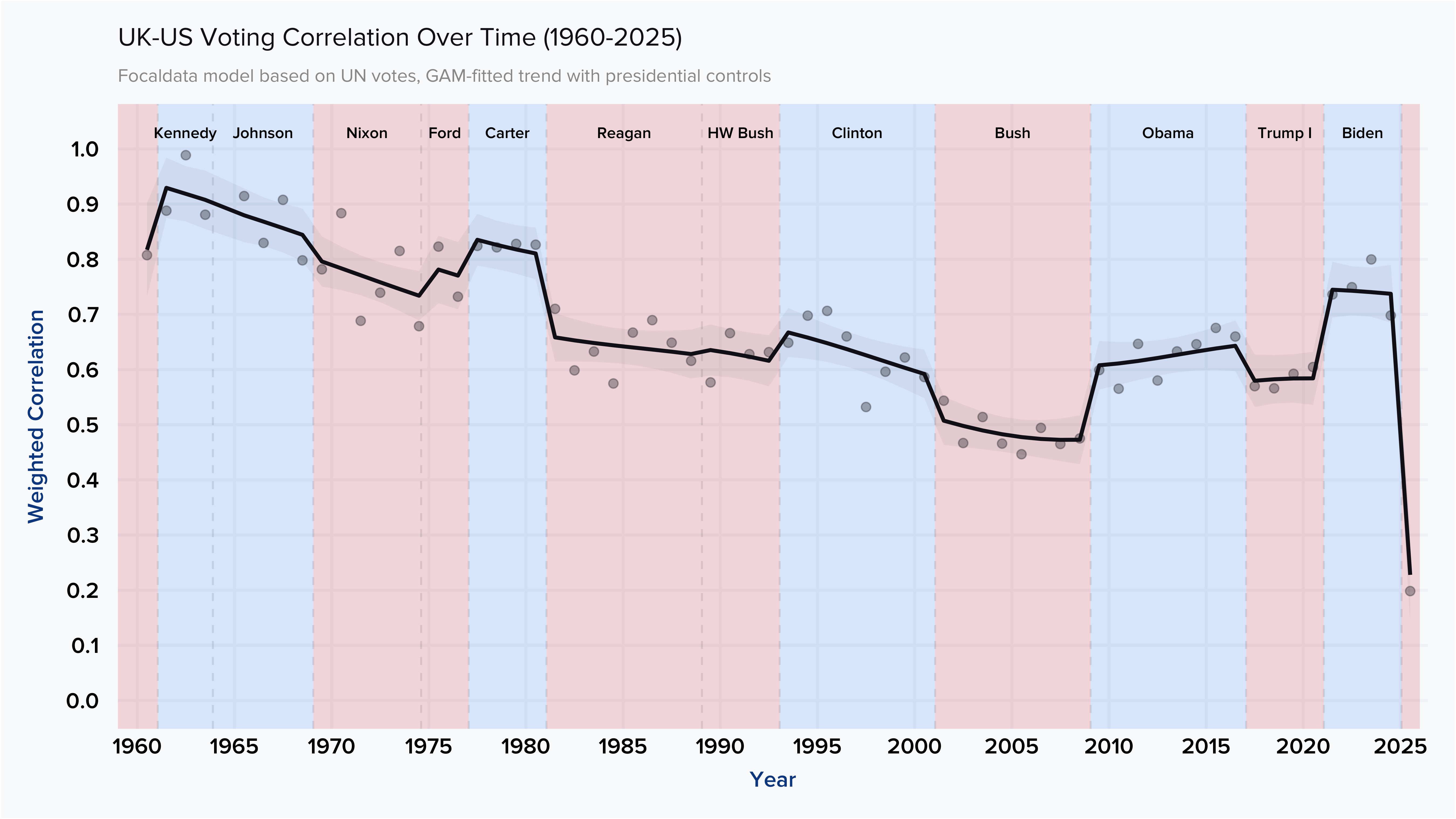
We analysed decades of United Nations voting data and responses to the World Values Survey and have proven empirically that the geopolitical centre of gravity is already shifting away from the United States and towards China, driven mainly by Europe’s increased distance from the US under the Trump presidencies. We also find that Central and South America are likely to have an outsized influence on the future balance of power.
Our analysis suggests that the United States is unlikely to be able to bring Europe onside in its pursuit of a bipolar axis. We have conducted public opinion studies in the United States, the United Kingdom and France, the latter of which reveal the collapse in favourability for the US and desire for greater European integration.