Blog/Polling
"Tradwife" polling exposes growing divide between young men and women
The term “tradwife” has become a fixture of online discussions about politics and culture. A shortening of the term “traditional wife”, tradwives typically refer to women who embrace a traditional homemaker lifestyle and share it publicly: videos of cooking, family life and domestic craft, often filmed in a deliberately retro aesthetic. For many, the tradwife label doubles up as both a lifestyle and an explicit rejection of corporate working life.
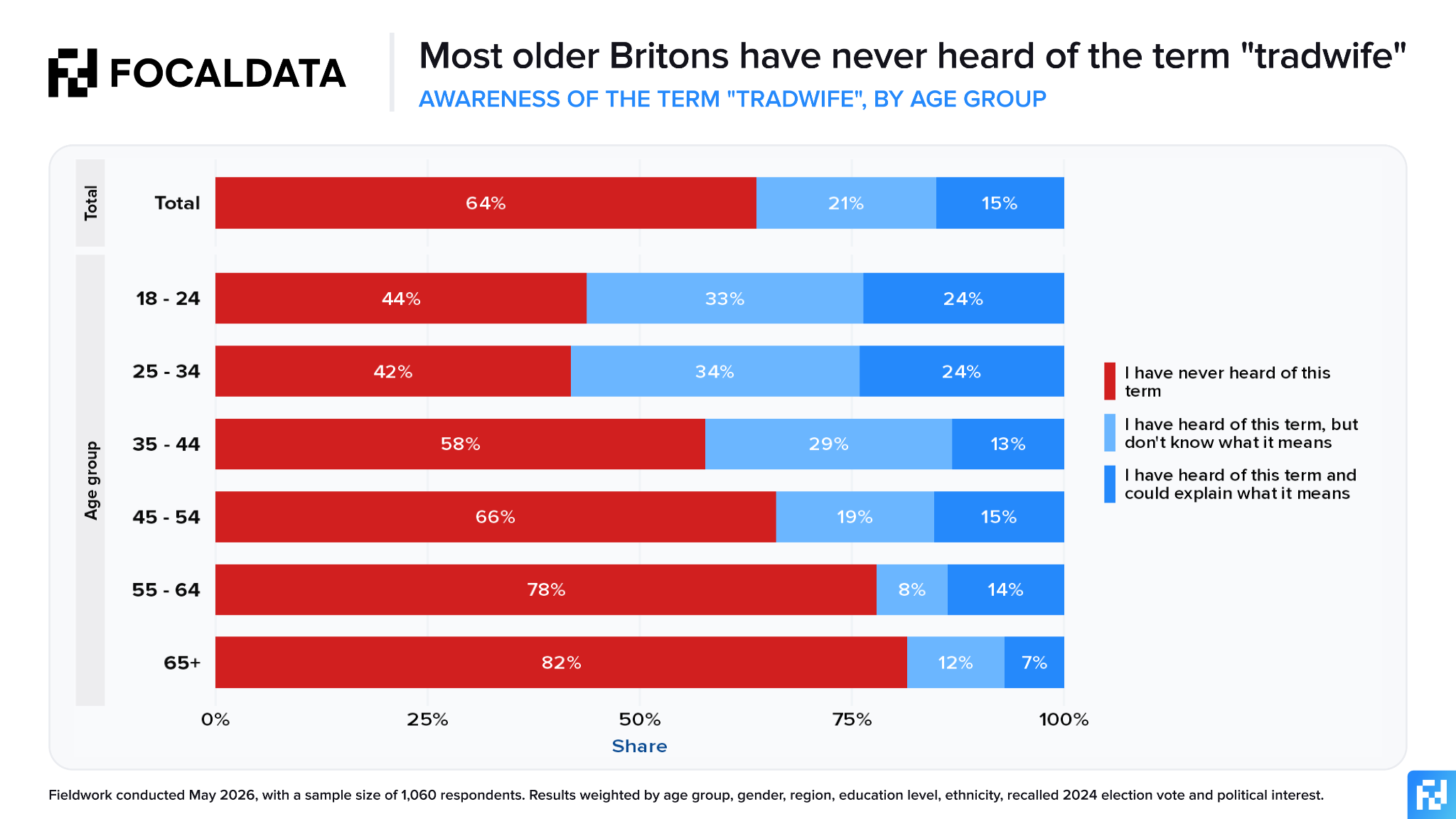
Our new polling, conducted in collaboration with the Rest is Entertainment podcast, asks a number of questions to try to find out more about what the British public thinks about tradwives. Firstly, we asked whether respondents had heard of the term tradwife, with 64% saying they had never heard of the term before. This includes more than 50% of those aged 35 and over, with less than 25% of those aged under 35 saying they had heard of the term and could explain what it meant.
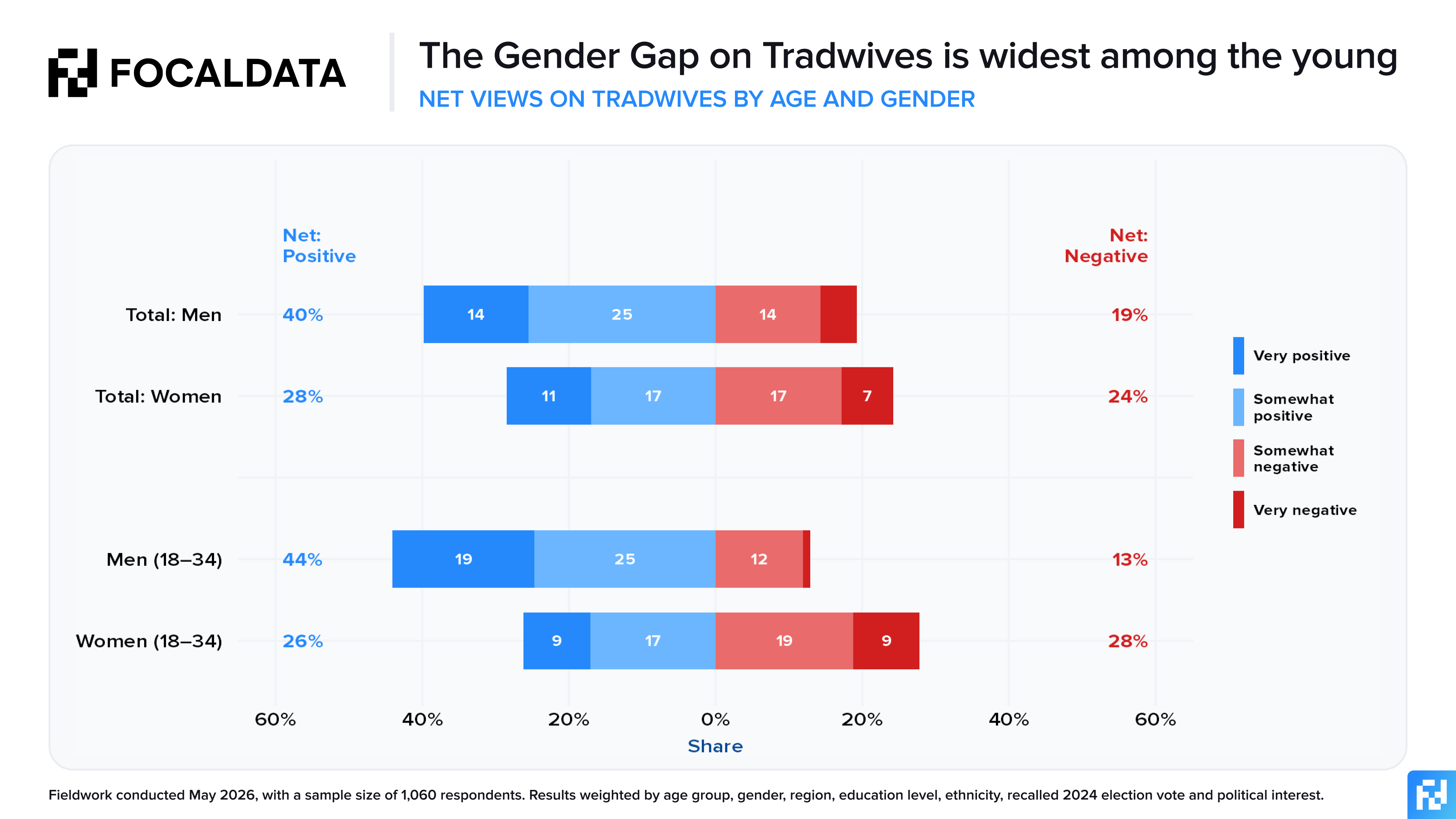
In spite of the charged nature of the term, when respondents were presented with a dictionary definition of “tradwife” (which was added to the Cambridge Dictionary in 2025) among both men and women the overall reaction was net positive. However, women were notably less positive than men and the gap widened sharply among young people (those aged 18-34). Young men were even more positive than the male average, sitting at +31 net positive compared to net +21 among men overall — and they held that view more strongly too, with 19% saying they felt “very positive” versus 14% of men overall. Young women, on the other hand, just slipped into net negative territory at -2 compared to +4 among women overall.
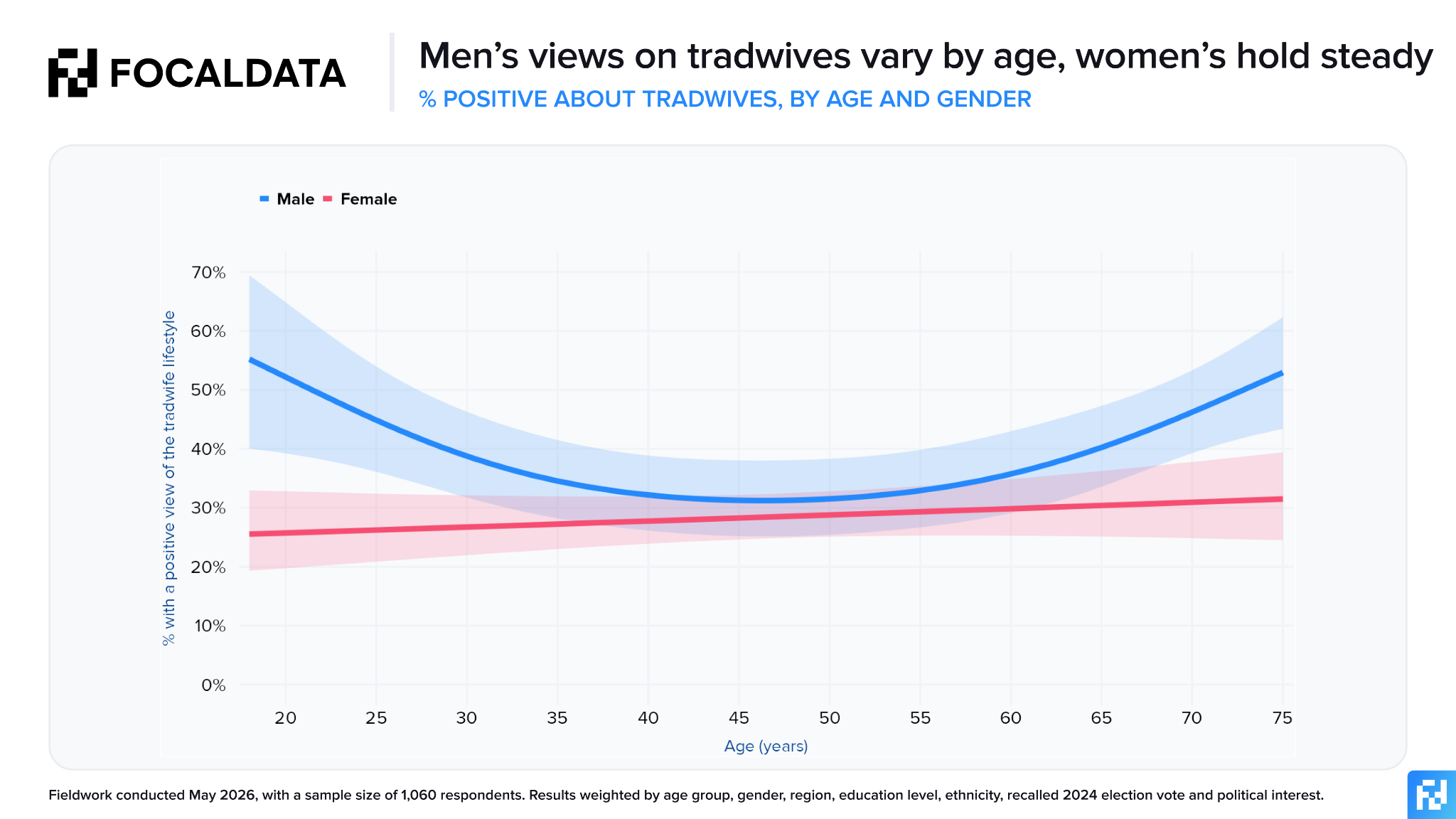
Men’s views on tradwives also vary much more by age compared to women. Both the youngest and oldest men are the most likely to have positive views about tradwives, forming a U-shaped distribution with a trough in middle ages where men sit at roughly the same level of positivity as women. Women’s views, by comparison, vary little by age with older women feeling only slightly more positive about tradwives than younger women.
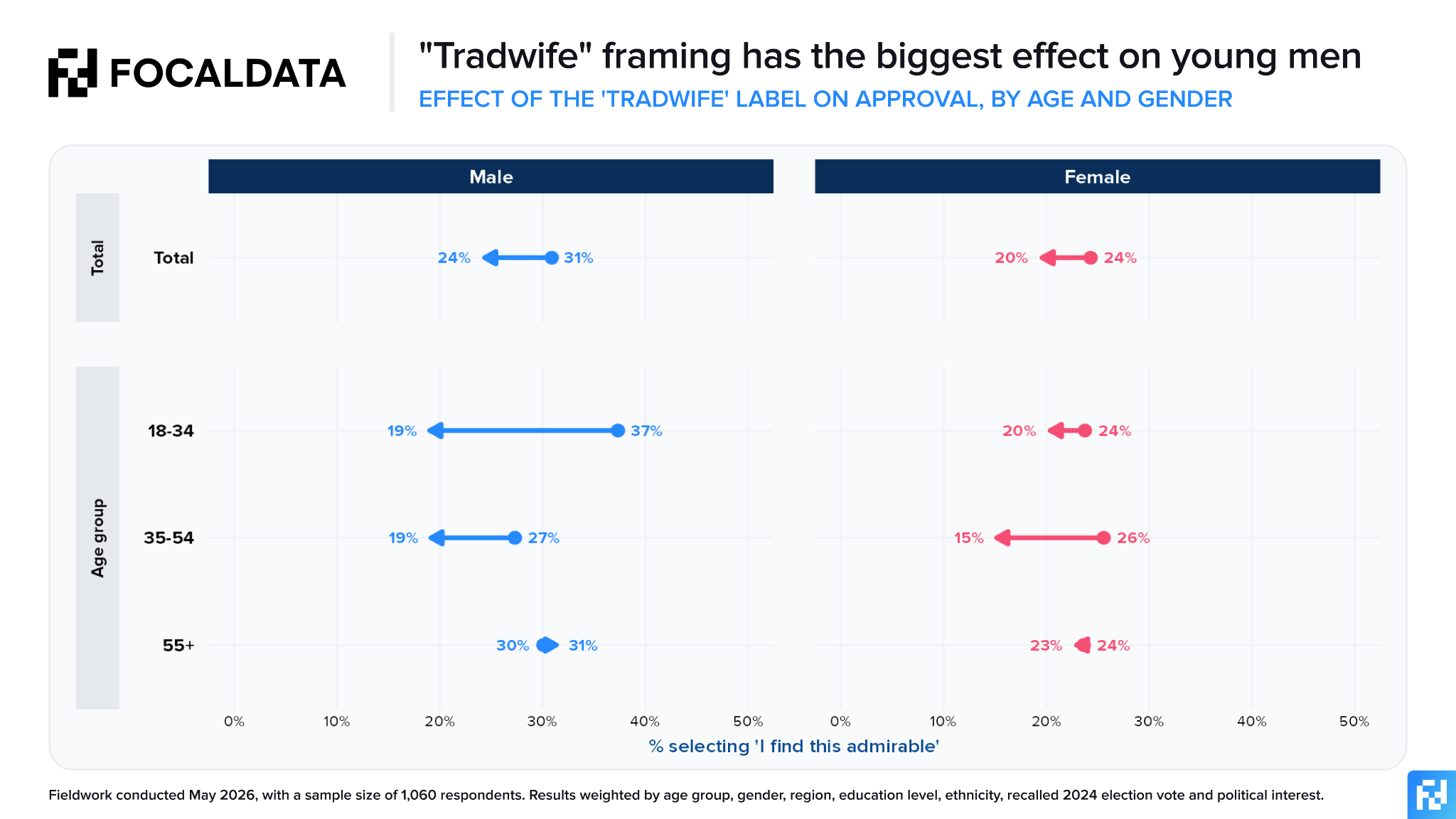
Women’s attitudes were also less affected than men’s when the framing of the question was changed. Respondents were shown one of two near-identical scenarios about a woman who had left her career to focus on the home. The neutral framing described a "full-time homemaker" who "bakes, keeps the house, raises her children, and says she has never been happier". The alternative described a "self-described tradwife" who "embraced traditional gender roles" and "rejected modern feminism".
When presented with the latter framing men and women were both less likely to say that they found this admirable. However, the drop was sharpest among young men where admiration fell from 37% (homemaker) to just 19% (tradwife). This indicates that many young men are sensitive to the politically charged nature of the “tradwife” label, even while broadly supporting the lifestyle the term denotes.
Focaldata's Chief Research Officer, James Kanagasooriam, appears on The Rest is Entertainment's bonus series "The Vibe Shift", with new episodes every Wednesday.
Data tables can be accessed here.