Blog/Research
Why 4 million young American women are making plans to leave the country
I speak from personal experience here: I am one of a growing number of American women under 35 who have moved overseas. With a growing gender divide among young American men and women, I wanted to find out what it means to be an American today for different groups, and what is driving the increased likelihood of a generation of young women seeking a life outside the United States.
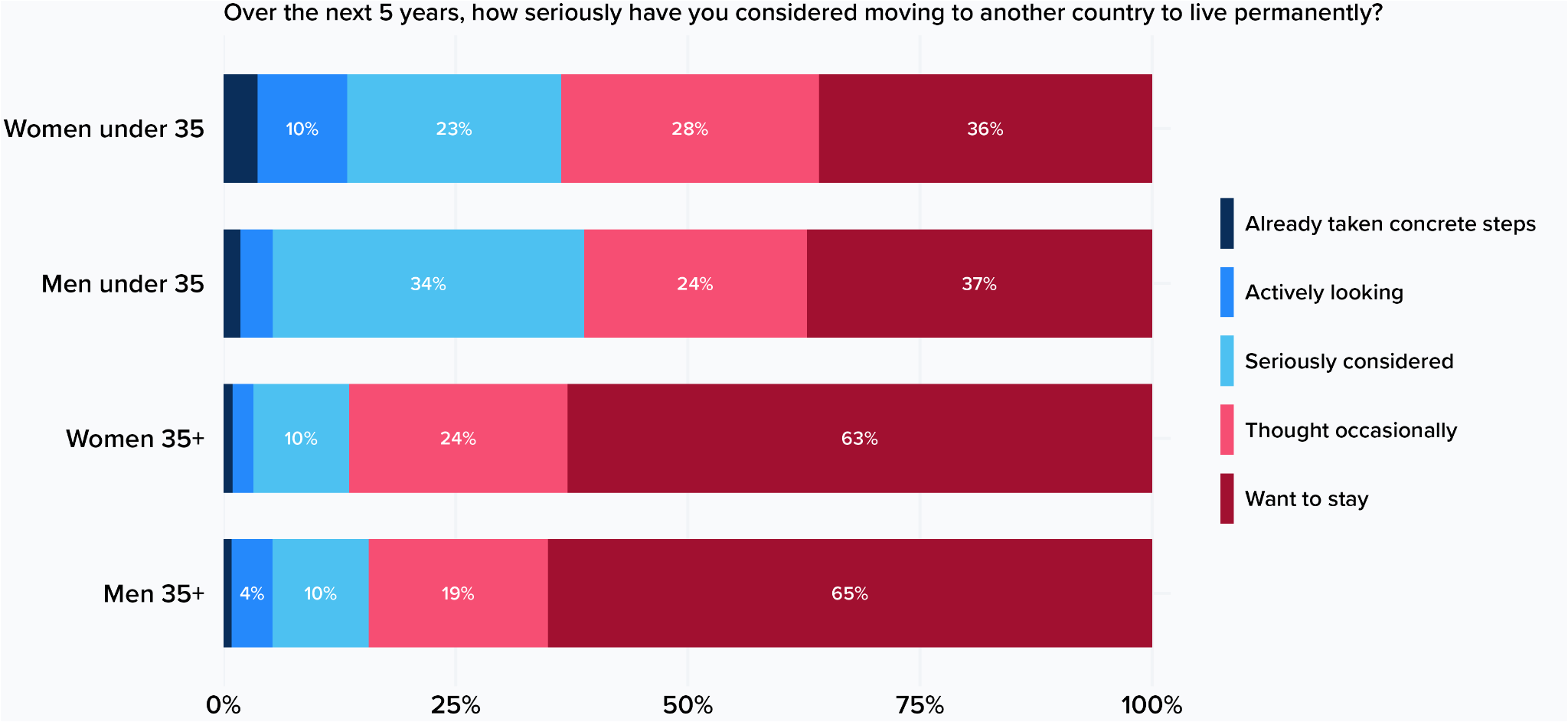
We found that young women are the most likely group to say they would consider leaving the United States. 36% of them have either seriously considered, are actively pursuing, or have already taken concrete steps to emigrate. More seriously, 10-15% of young women are actively looking to live in another country permanently. That’s 4 million young American women in total.
We dug deeper than this headline number to understand what is driving this shift, and what being American means to young women. We have three key takeaways:
- Why young women are leaving: They feel that the country is only going to get worse for them. They don’t trust American institutions, or the American people to do what’s right for them.
- What kinds of women are leaving: The women who are the most active in their community and care about women’s healthcare are the small, but strong, sub-set of Americans that would follow-through on plans to emigrate.
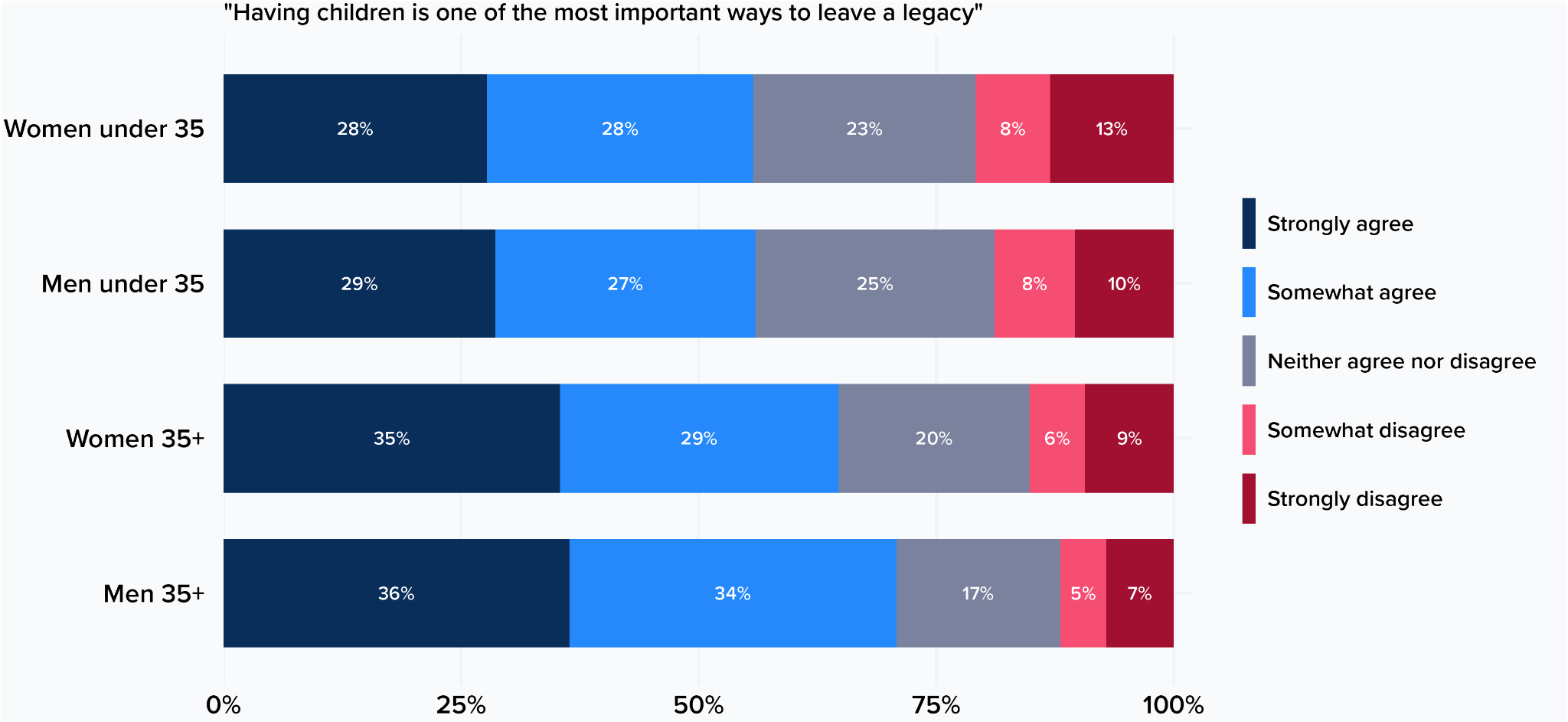
- What do they want for their future: Despite feeling like they could start a family or a small business, American women don’t see the same career opportunities for them in the country, and are increasingly less likely to feel that having children is one of the most important ways to leave a legacy.
This means that for the women entering the workforce, or American democracy in 2026, opportunities for women’s careers, futures, and healthcare have to improve or they may opt out entirely.
The future of being in America
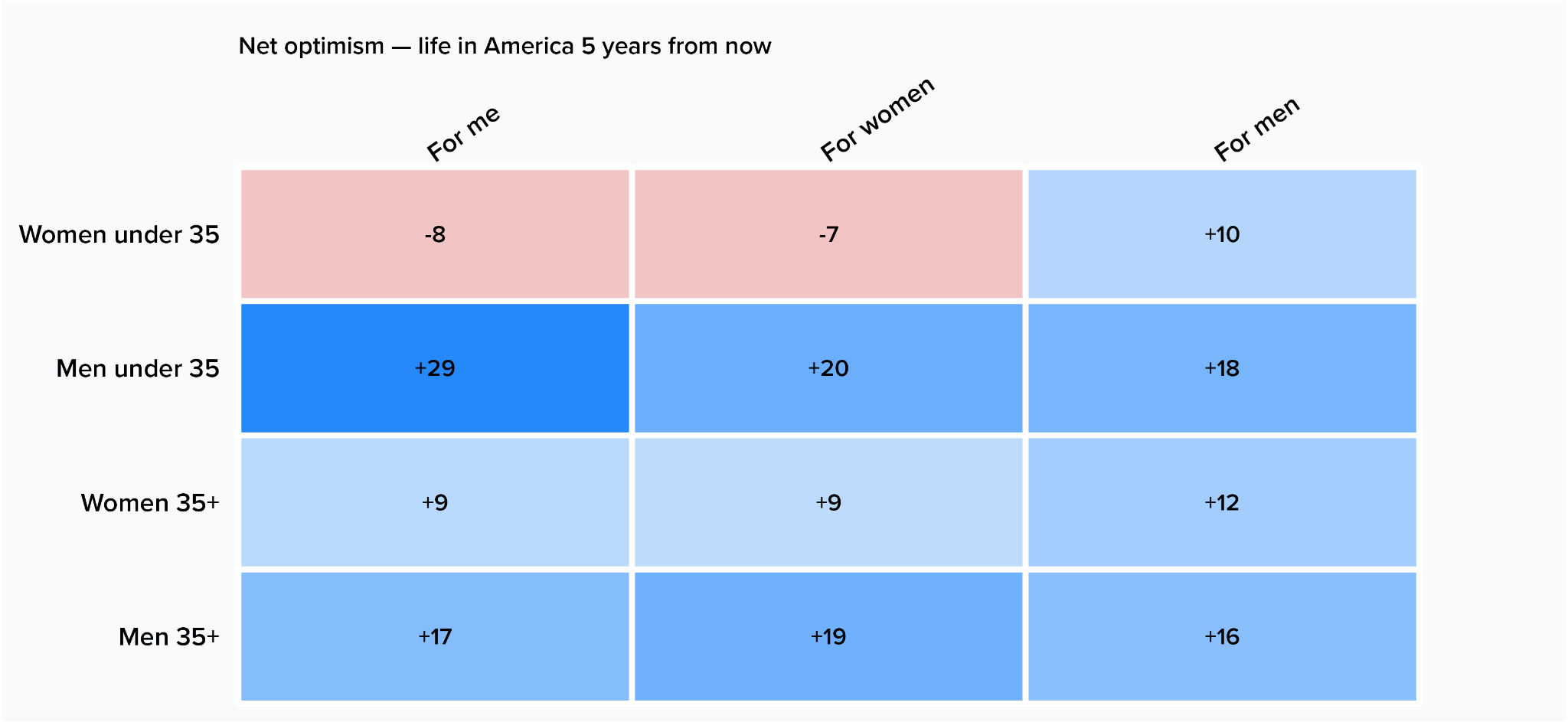
Young women are the least likely group to feel that American institutions stand for them, and that estrangement shows up in how they see the future. Asked whether the country would look better or worse for them in five years, they were the only group to expect things to get worse. That pessimism opens a stark divide: among people under 35, men and women are 37 points apart, while the gap shrinks to just 8 points for men and women over 35.
This isn’t due to complete disaffection; young women still feel proud to be American. In fact, they are more likely than their male counterparts to say that America’s freedom and rights and natural environment are reasons for national pride (38% vs 31% and 28% vs. 19% respectively).
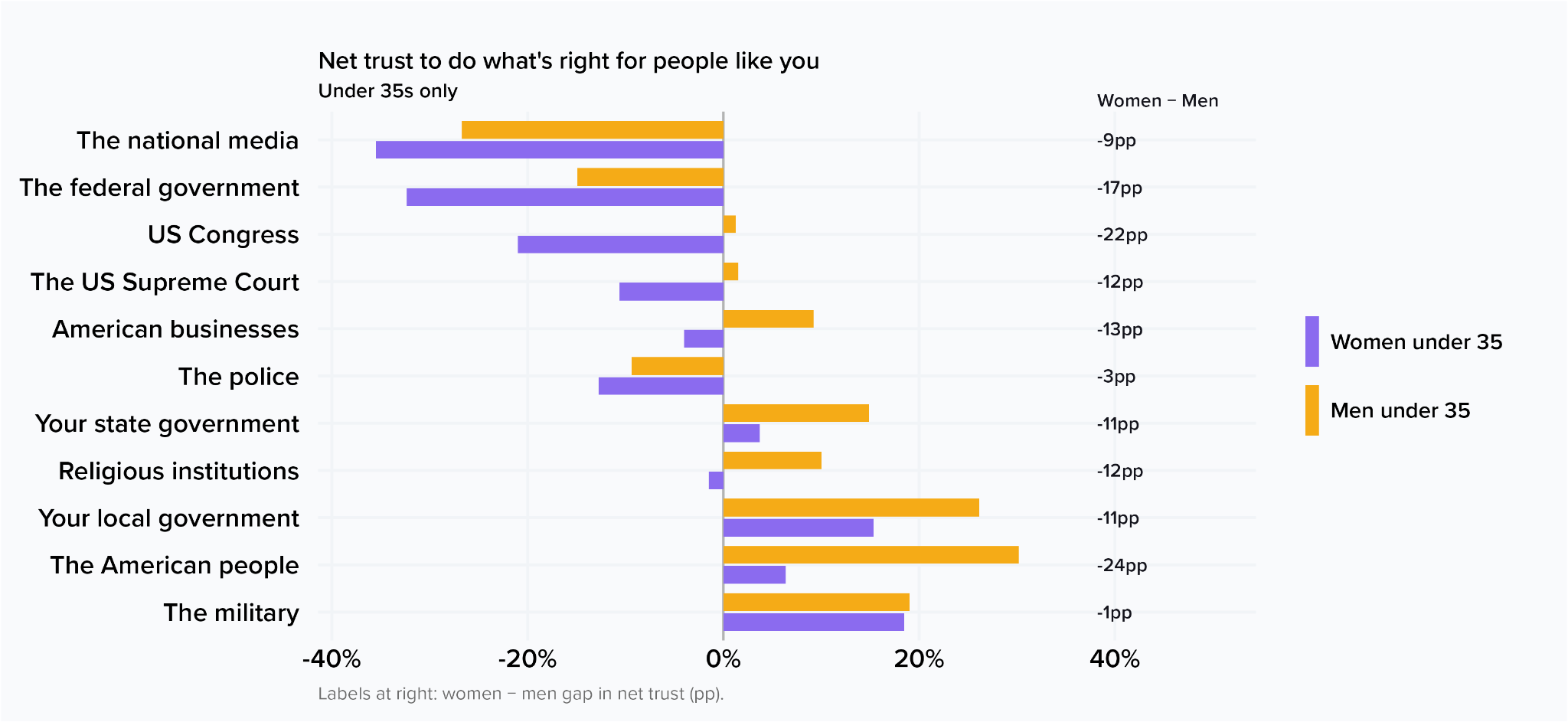
However, when it comes to America's institutions, they have relatively low levels of trust when it comes to those institutions doing the right thing for people like them. The biggest gap is between trust in American people (24pts), showing that distrust is not confined to media narratives and abstract institutions, but from day-to-day interactions as well. So while they feel proud to be American, there is a growing sentiment that the country is just not for them.
Impact on Leaving
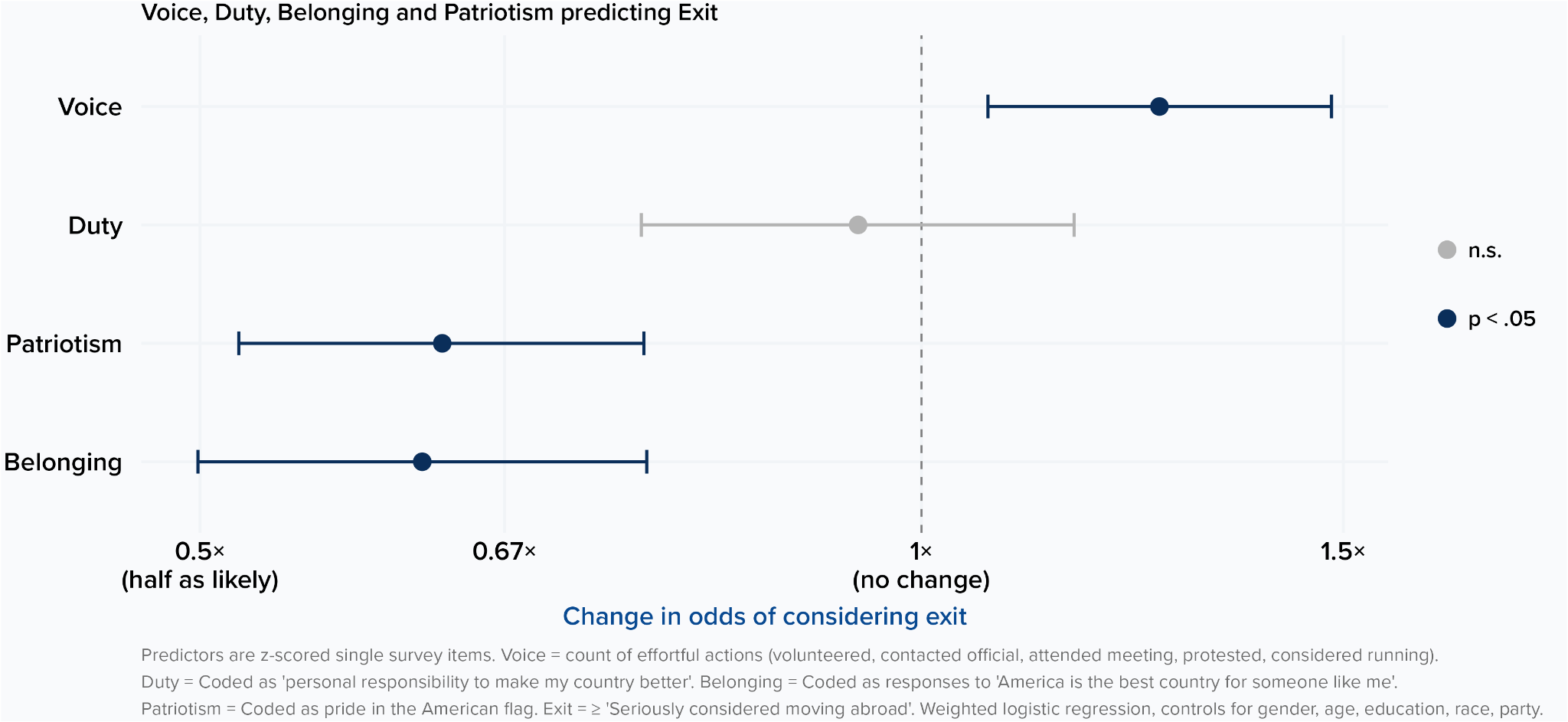
The women most drawn to leaving are not the ones who have given up. Instead, they are the ones trying the hardest to change the country. To understand what drives people to leave, and what might make them stay, we looked at how some latent attitudes can predict “seriously considering” emigration. The strongest signal was political engagement, which we measured as “voice”: the sum of effortful actions people take to shape the country, from volunteering and contacting officials to protesting or considering a run for office. The more of these things someone did, the more likely they were to think about leaving. Patriotism and a sense of belonging cut the other way, lowering the odds of seriously considering it, while a sense of duty to improve the country had little effect. Taken together, these findings suggest that the “leavers” are people who are not sitting on the sidelines, they are the most likely to take action, whether it’s in their community or exit from it.
There are many reasons someone could choose to leave the United States. Some of these are “pull factors” (wanting to see more of the world, for example, or feeling that the quality of life in another country is desirable). On the other hand, “push factors” are things that people are finding challenging domestically that would leave someone to try and build a life elsewhere.
When tested, it turned out to be a small group of people motivated by push factors, specifically women’s health, that would drive someone to seriously consider leaving the United States.
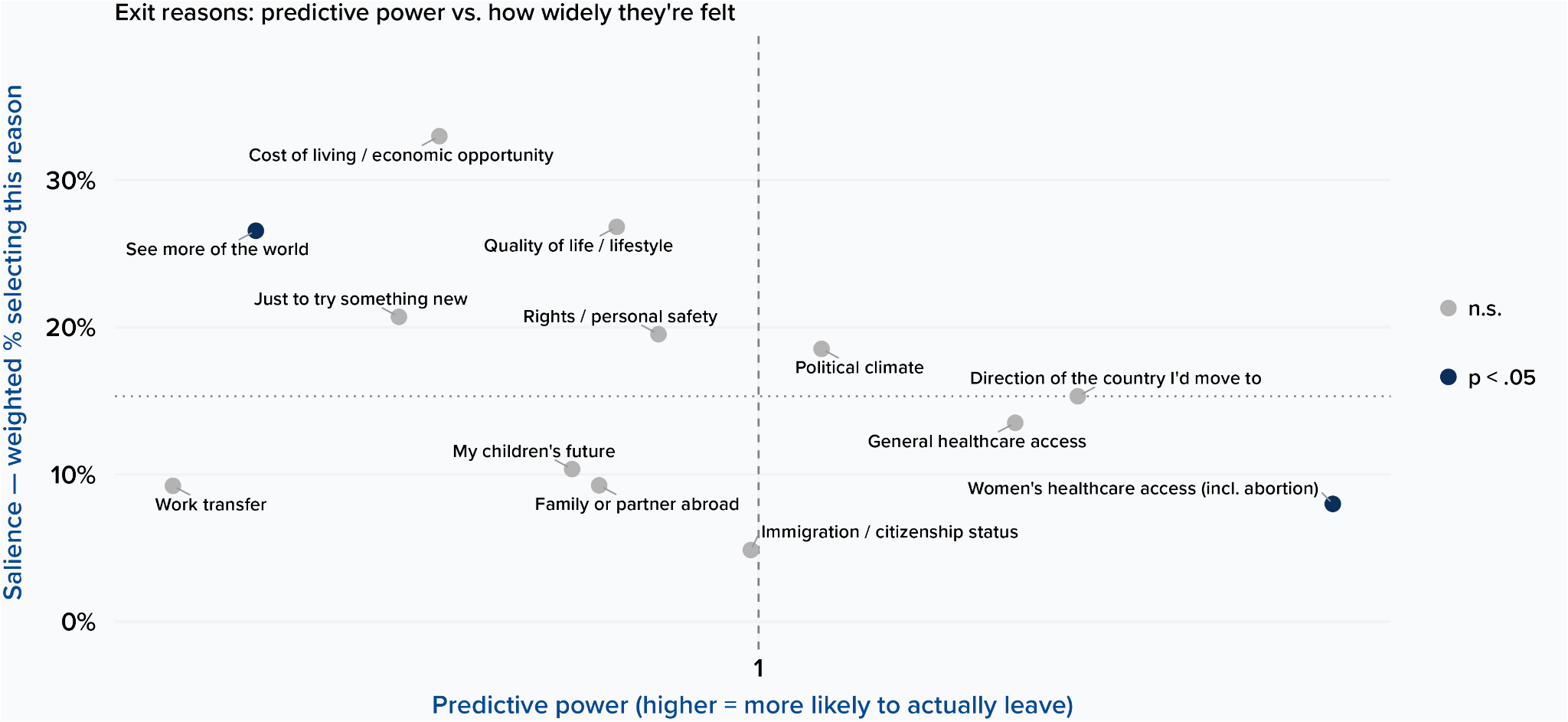
Of the options presented, it was one of the least frequently chosen. However, those who say this is important are more likely to actually follow through with an overseas move.
The result
This leaves young, engaged women in a position in America where they have the agency to work within the system, but feel they aren’t quite able to get anywhere.
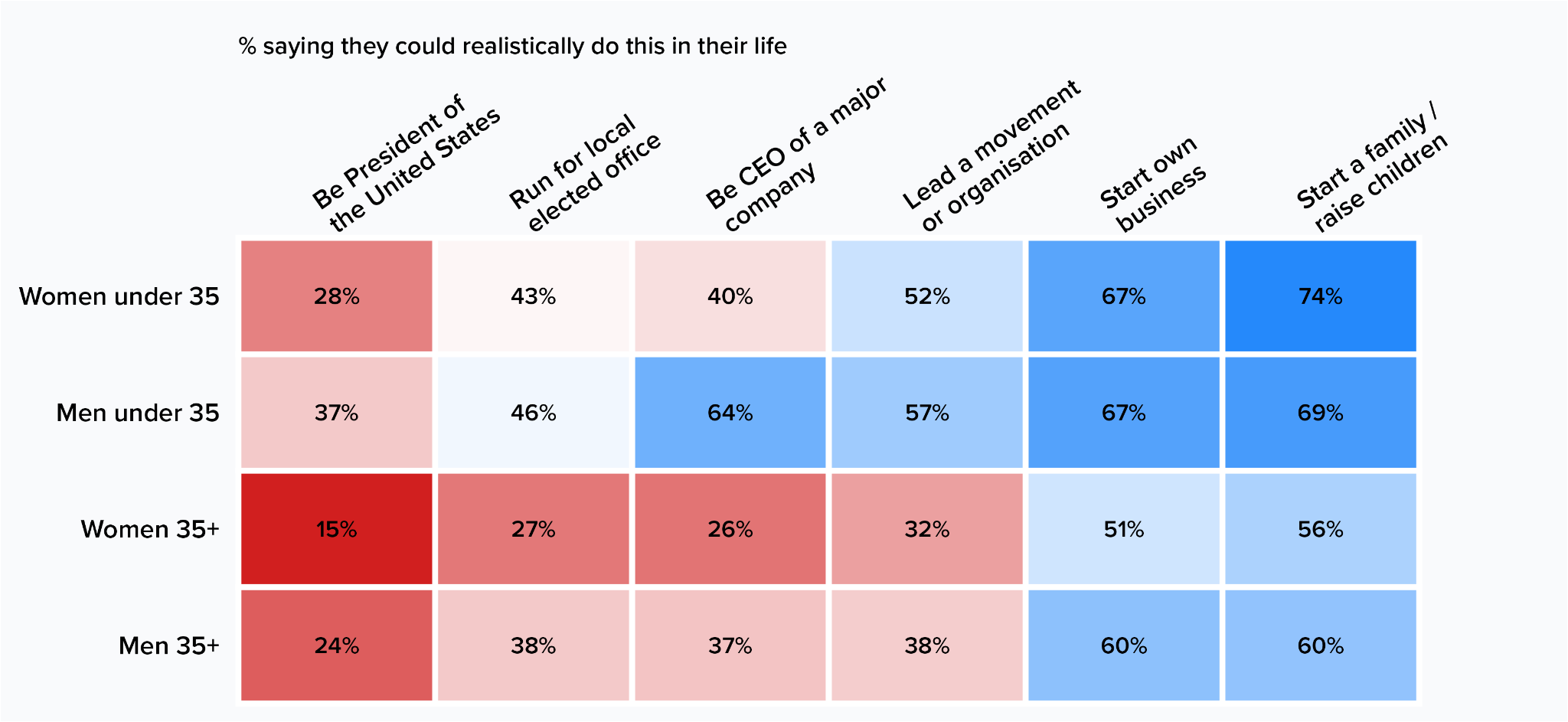
Young men and women are equally likely to say they could start their own business, but a 24pt gap emerges when you ask if they believe they could be a CEO of a major company. Instead, young women are overwhelmingly likely to say they likely could “start a family and raise children” more than any other group and more than any other future path presented.
This does not line up with their ambitions. Young women are the least likely group to say that having a child is one of the most important ways to leave a legacy.
So where engaging with the system isn’t working, women are choosing to opt out entirely.
This leaves a generation of women who feel their home isn’t working for them, and they have to leave behind things in the world they know to follow their true ambitions and access the healthcare that they are looking for. The consequences for the country could be an absence of future leaders and talent, both in its labor market and in its democracy. To win back America’s young women, they have to believe there is a future there worth staying for.
Focaldata interviewed 1,848 Americans aged 18+ online between the 3rd and 15th of June 2026. The data was weighted by age, gender, ethnicity, education, region, 2020 past vote, 2024 past vote, and political interest. Focaldata is a member of the British Polling Council and abides by its rules. Tables can be found here.