Blog/Analysis
How to Communicate in an Attention Crisis
In the late 1990s, the New Media scholars Jay David Bolter and Richard Grusin coined the term ‘hypermediacy’ to describe a growing phenomenon in the way we interacted with media in the late twentieth century, in which overlapping windows compete for our attention.
They were writing as the desktop computer became more commonplace in American homes. Within 15 years of their analysis, a majority of US households would have at least one smartphone, ushering in an era in which hypermediacy became a function of everyday life. The average smartphone user now switches between apps multiple times per hour, and many watch television with a second screen permanently in hand.
A majority of the UK public (53%) now say that when they watch television, they either split their time equally between the TV and other devices, or that the TV merely serves as a secondary screen while another device has their primary attention. Among under 45s, the figure rises to two-in-three. It’s no surprise, then, that many reports have emerged in the last couple of years that streaming platforms are instructing writers to simplify their plots and add more exposition to their scripts to explicitly cater to these ‘second screen viewers’.
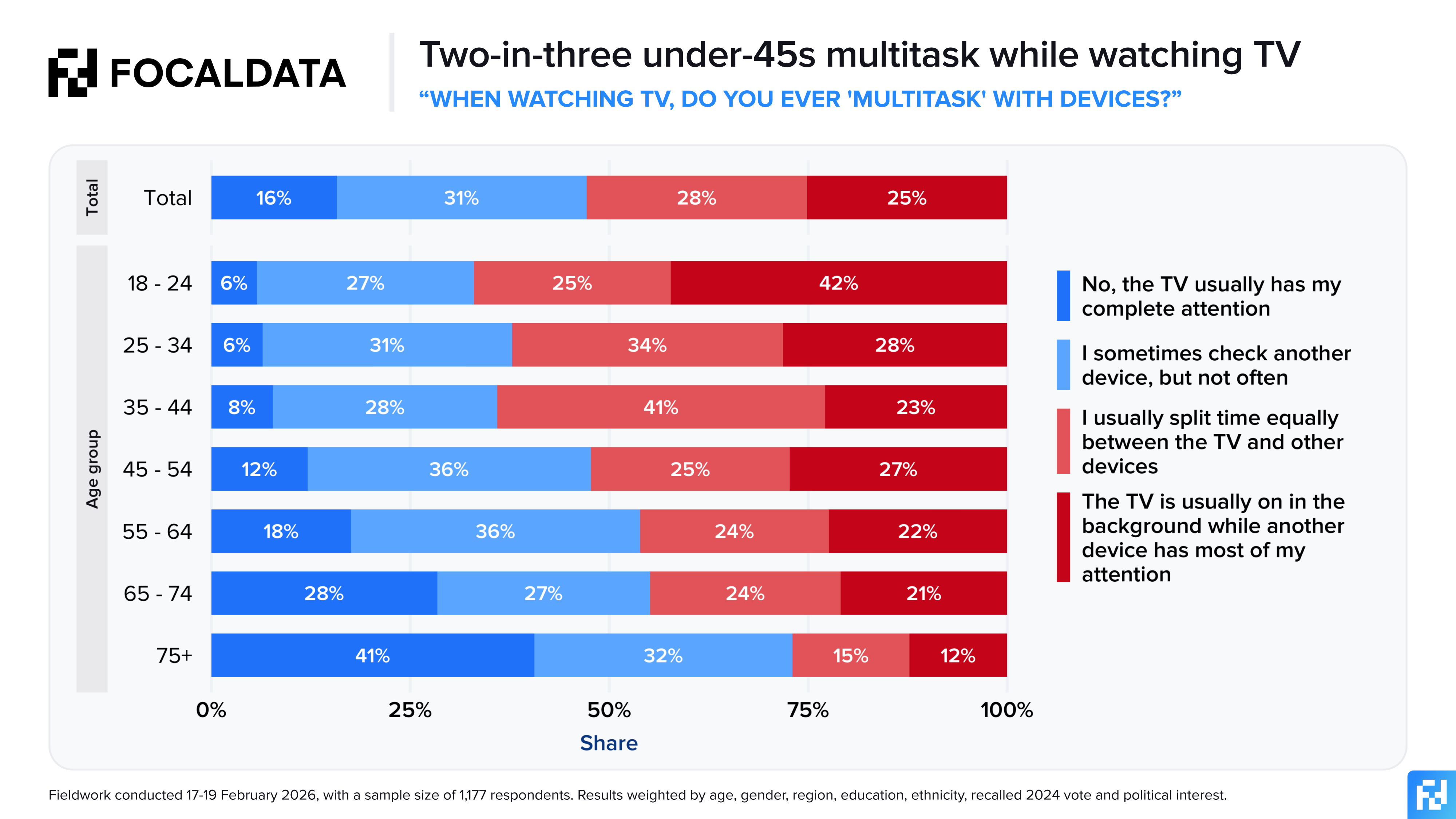
I recently read some of Ian Leslie’s work reviewing one of his earlier pieces on advertising, and got to thinking about wider ideas on how we communicate in a hypermediated world where multiple screens compete for a person/consumer/voter’s attention. Through the lens of TV advertising, I wanted to test how effective messaging of the past would perform on a younger generation. Do the iconic ads of yesteryear hold up with a new generation used to short-form content? Would today’s consumers have the patience for an advert like Honda’s ‘Cog’ in a world of non-linear television, and one where many ads can be skipped after a few seconds?
Advertising is often at the forefront of innovations in communication, but this analysis has wider implications. How does a political party or campaigning organisation get its message across, for example? Many of the clients we work with are contending with the shift in attention spans and recommunicating in a world in which old messages no longer seem to work.
The Attention Crisis
Second-screening is merely a symptom of a wider phenomenon, and its impacts run deeper than mere viewing habits. Changes in attention spans and people’s ability to concentrate for prolonged periods of time are having profound effects on the way younger people are interacting with the world around them.
Fewer and fewer of us are reading for pleasure, and falling attention spans are clearly a major tenet. In our survey, more than two-thirds of under 45s said they sometimes can’t stop themselves from checking their phone when they ‘should be focusing on other things’, and only 1-in-8 disagreed.
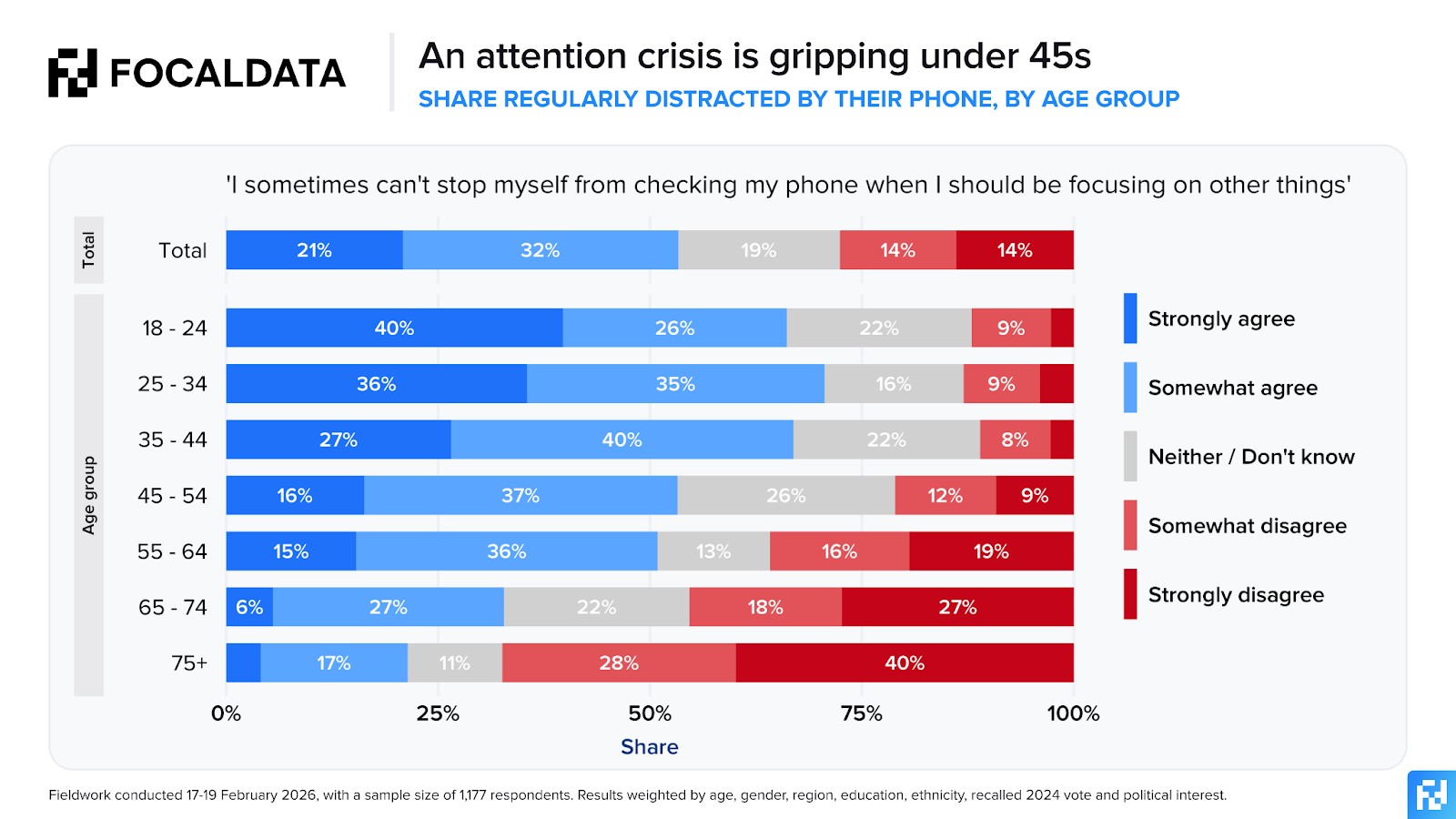
This is not merely a function of higher mobile phone usage among younger cohorts. A broader question about the ability to concentrate on tasks requiring sustained attention illuminated the same worrying trend, with a clear break occurring around age 45.
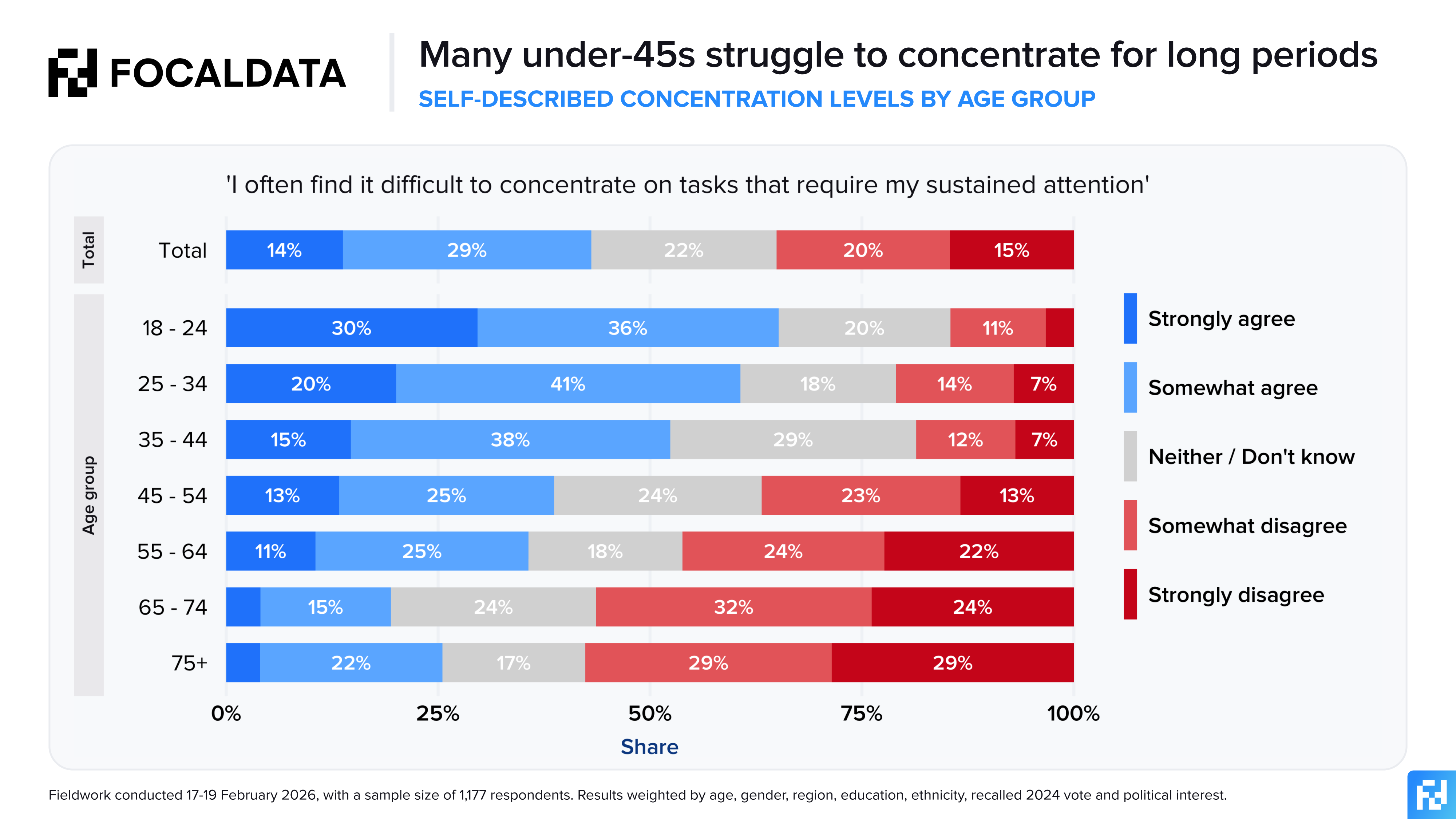
This age break corresponds almost exactly to the millennial/Gen X divide, and whether someone grew up with the rise of the internet or came of age with the rise of smartphones. I’m sure Jonathan Haidt would have plenty to say about the above chart. Among younger people, we have generations for which high anxiety, low concentration and low self-control is becoming much more common.
Testing Recall
One of the problems people run into when running message-testing surveys is measuring cut-through beyond respondents’ initial reactions. A brand might want to ask a simple ‘what did you think of this advert?’ question, but will people even remember the ad in a few minutes, let alone in a few weeks? To try and mitigate this issue, we showed respondents ads at the beginning of the survey, asked 10-15 minutes worth of other questions, then tested which ads they remembered seeing at the start.
We tested a total of 16 adverts, from a 1971 Coca-Cola ad, through to Anthropic’s ‘Keep Thinking’ Claude spot from 2025.
Prior exposure is the biggest driver of recall
We found that prior exposure to an ad significantly increased the chance of recalling it at the end of our survey. A respondent who had seen an ad before was about 70% more likely to recall it than someone who had not.
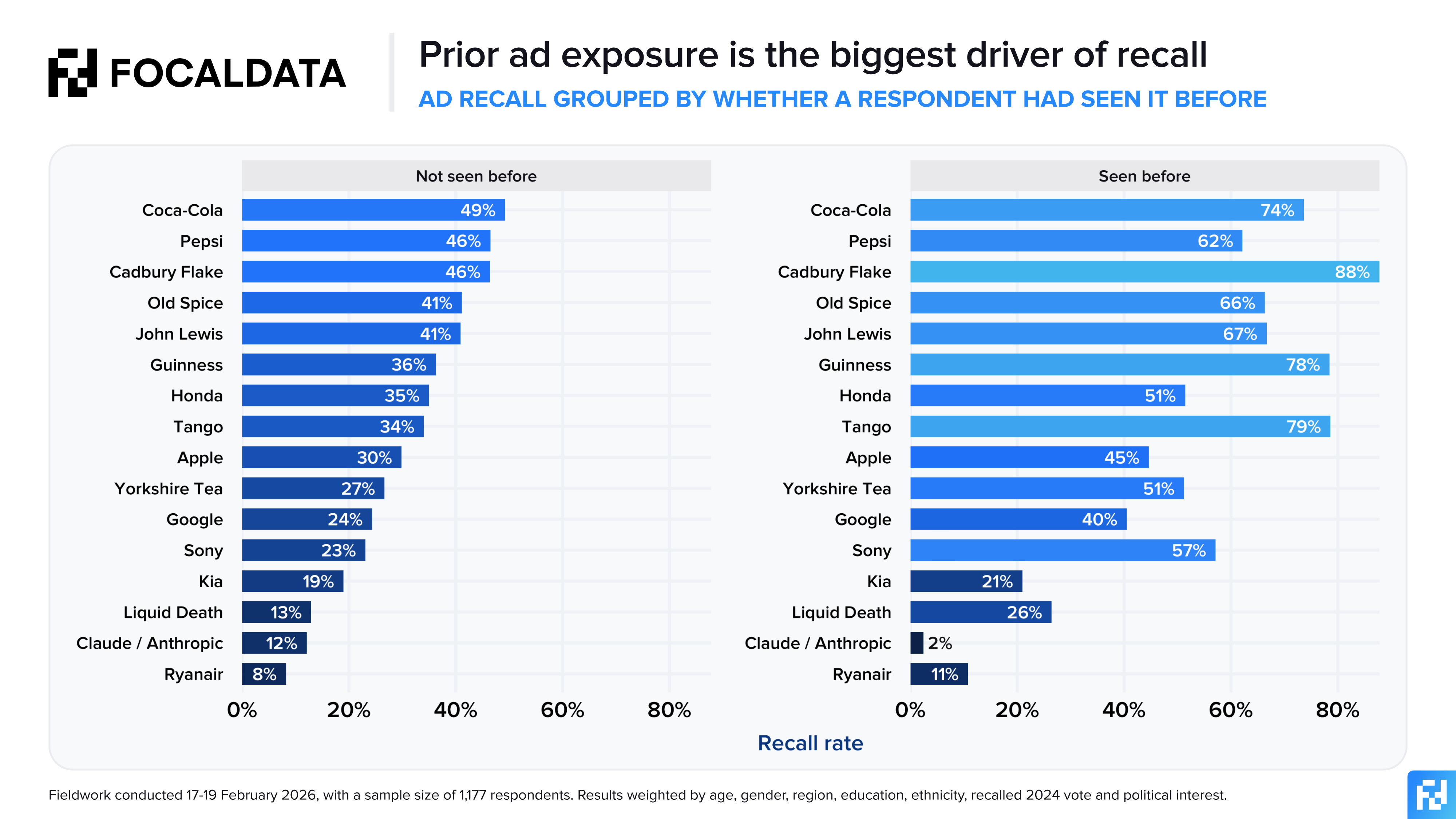
Among people who had not seen it before, the average advert was remembered by fewer than one in three people after just a 10-15 minute delay, even after they were given a list of possible brands to choose from.
This is one of the big messaging lessons from the study. Our experiment only just touches on a ‘real world’ scenario. Ultimately, our respondents know they are answering a survey on adverts and are occupied with that task only. They do not have the distractions of life to contend with, nor are they being asked a few days after the fact. That recall is so low even in this environment is precisely why any message needs to be repeated over and over again before it even begins to cut through to the public.
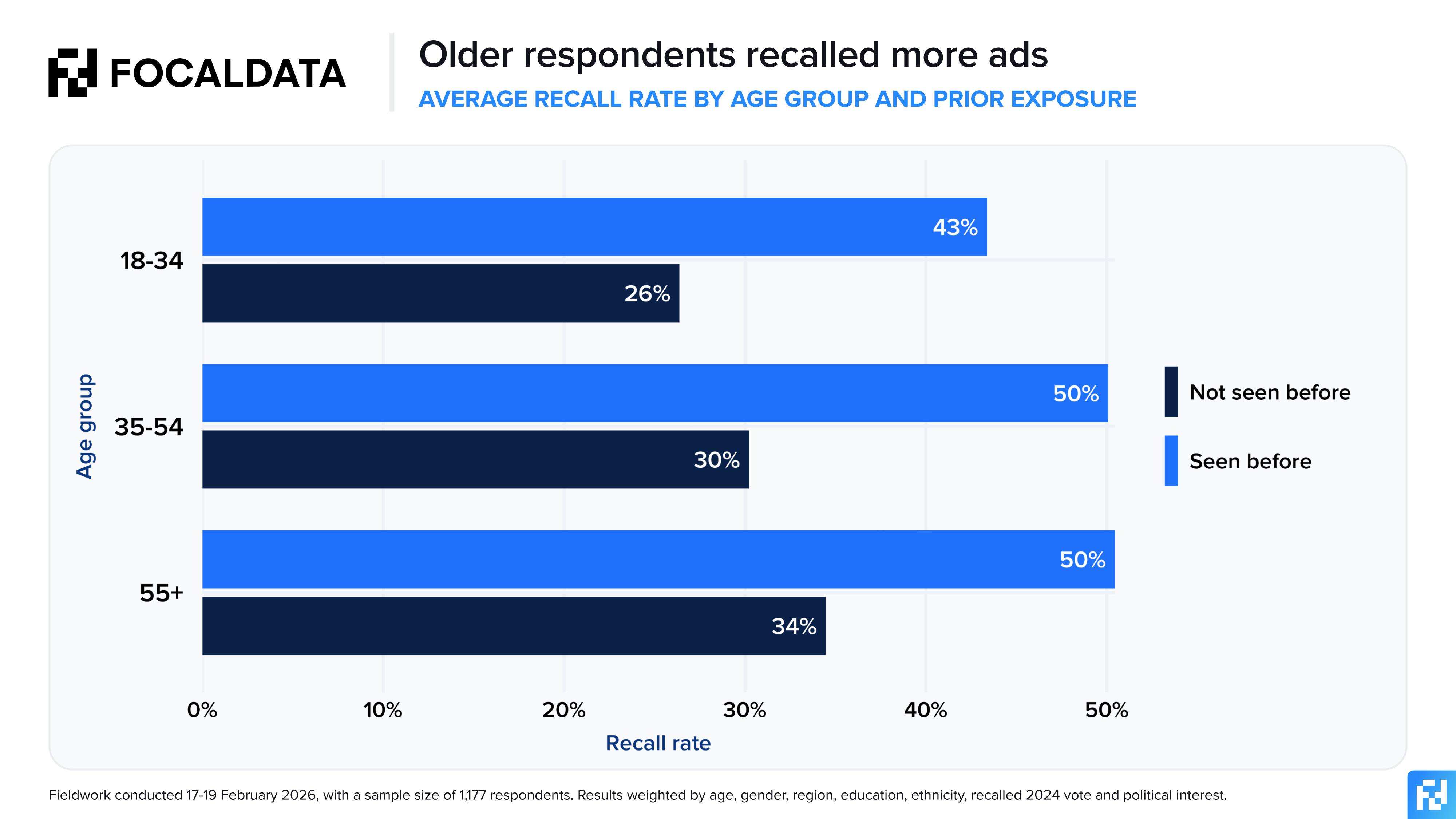
When we look at the effects of attention spans, those who say they have no problems with concentration are about 40% more likely to recall an ad than those who struggle to concentrate. Age also has a significant effect on recall, but probably not in the way you might expect. Younger respondents typically recalled fewer ads, even after controlling for the fact that older respondents had seen more of them beforehand. All other things being equal, an average person aged 55 or over was about 30% more likely to be able to recall a specific ad than someone under the age of 35.
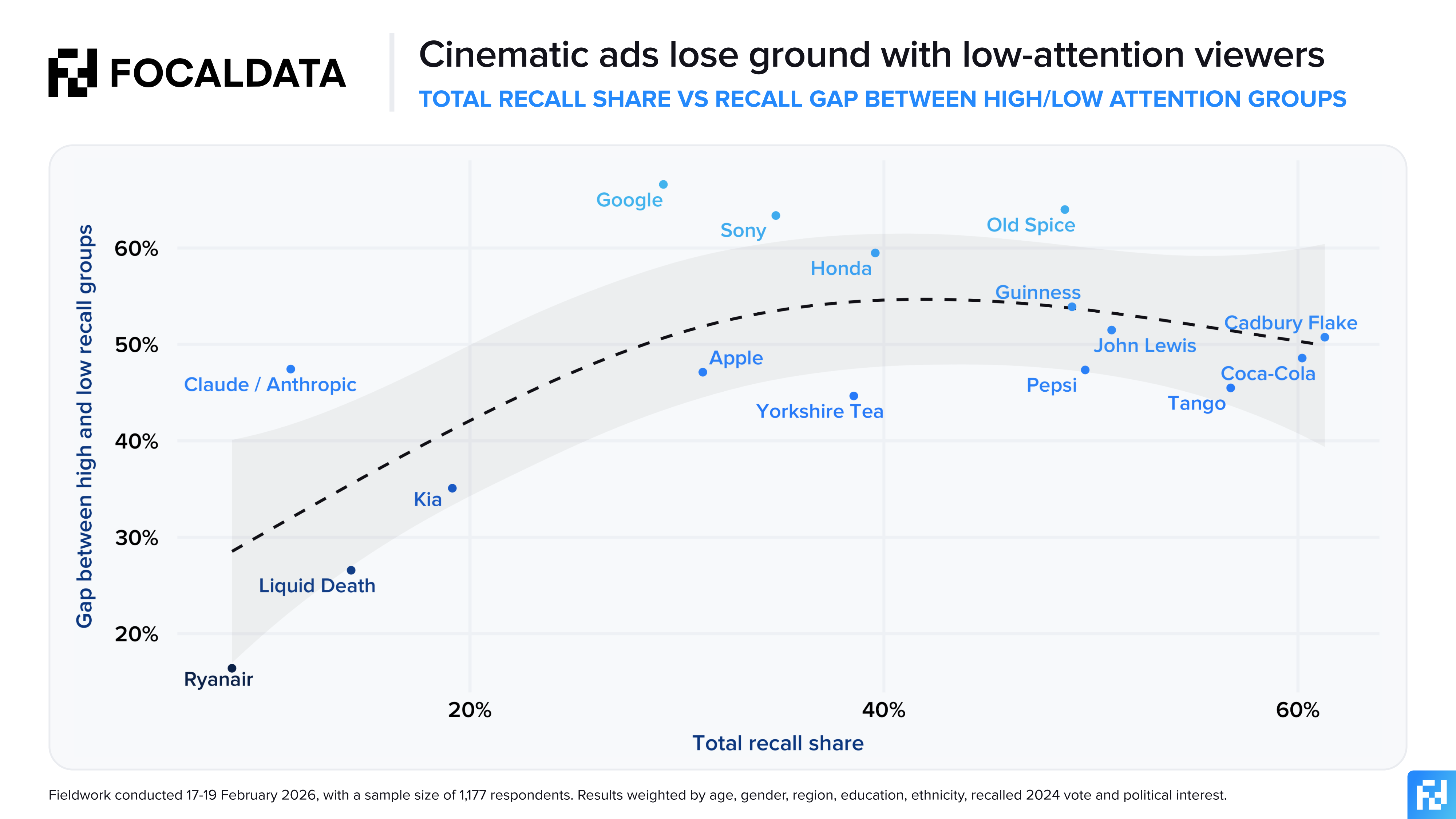
Slow ads underperform in low-attention environments
We see big differences in recall rates for individual ads when we divide our sample into high and low recall groups (the high recall group correctly remembered over half of the ads they were shown). Four of the six with the biggest gaps between the two groups were ‘slow’, more cinematic pieces: Sony Bravia, Honda Cog, Guinness and John Lewis. These ads, all from at least a decade ago, are designed to reward sustained attention. They fare well with high-attention audiences but falter when attention is scarce. In contrast, Yorkshire Tea’s recent comedic, product-focused ad resulted in one of the smallest gaps between the two groups.
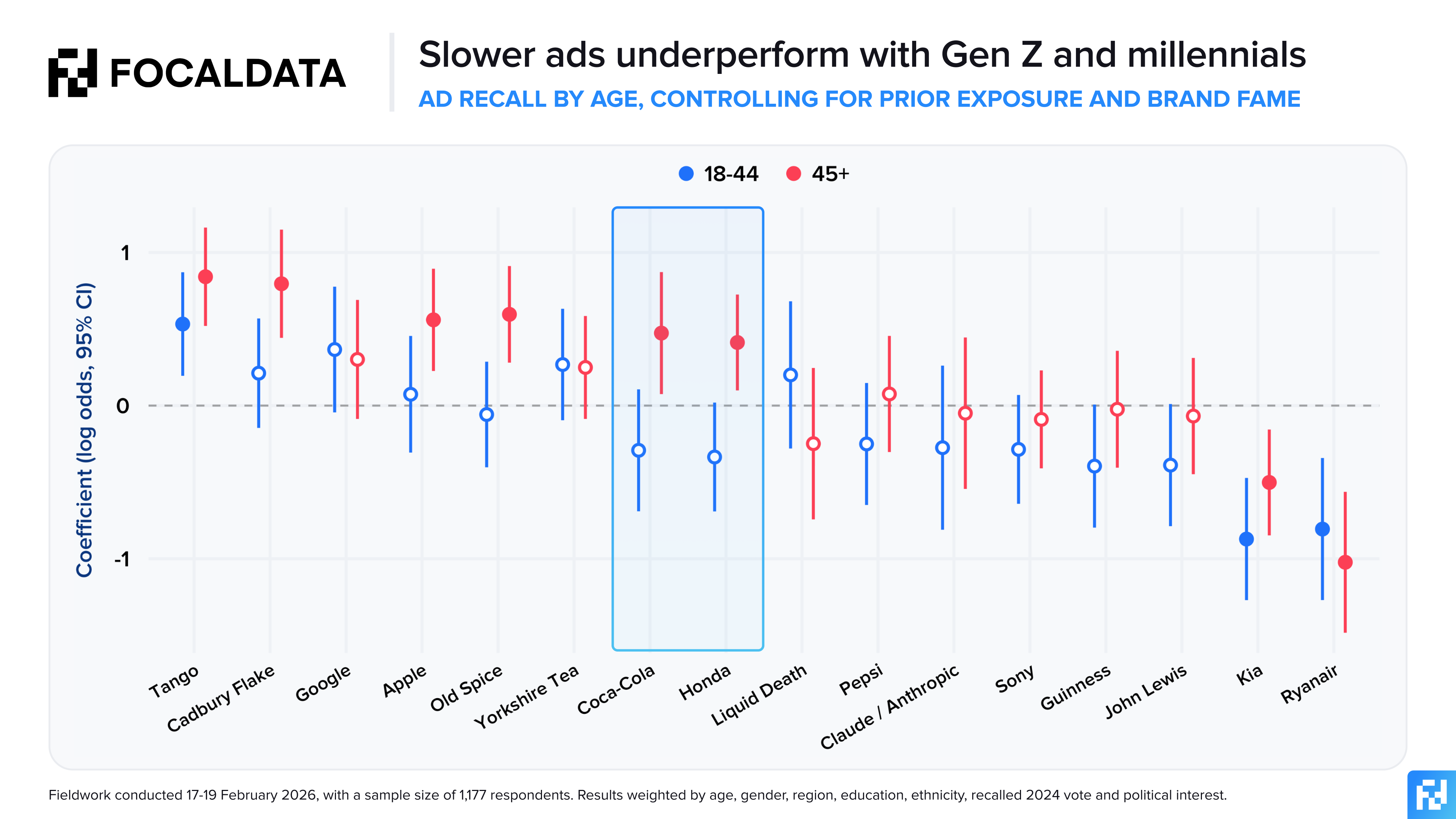
Initial brand awareness has a strong influence on recall, again underscoring the impacts of familiarity. The four youngest brands we tested all placed in the bottom five of overall recall rate. To model how truly effective each advert was, we needed to control for both whether a respondent had seen it before and when the company was founded.
In doing this, we see what we might have expected given the low attention spans of Gen Z and millennials, that slower adverts like the Honda ‘Cog’ perform well with older age groups, but poorly with younger viewers.
Serious messages are becoming poisonous
After controlling for the aforementioned effects, we modelled how the attributes people used to describe each ad affected later recall. Naturally, ads which were seen as ‘product-focused’ drove some of the highest levels of brand recall in our testing, but when we look at the other end of the spectrum, perceived seriousness is marketing poison for younger, low attention respondents. If a respondent under 45 said an advert was ‘serious’ after watching it, they were significantly less likely to recall it later, the strongest negative drag of any attribute we tested.
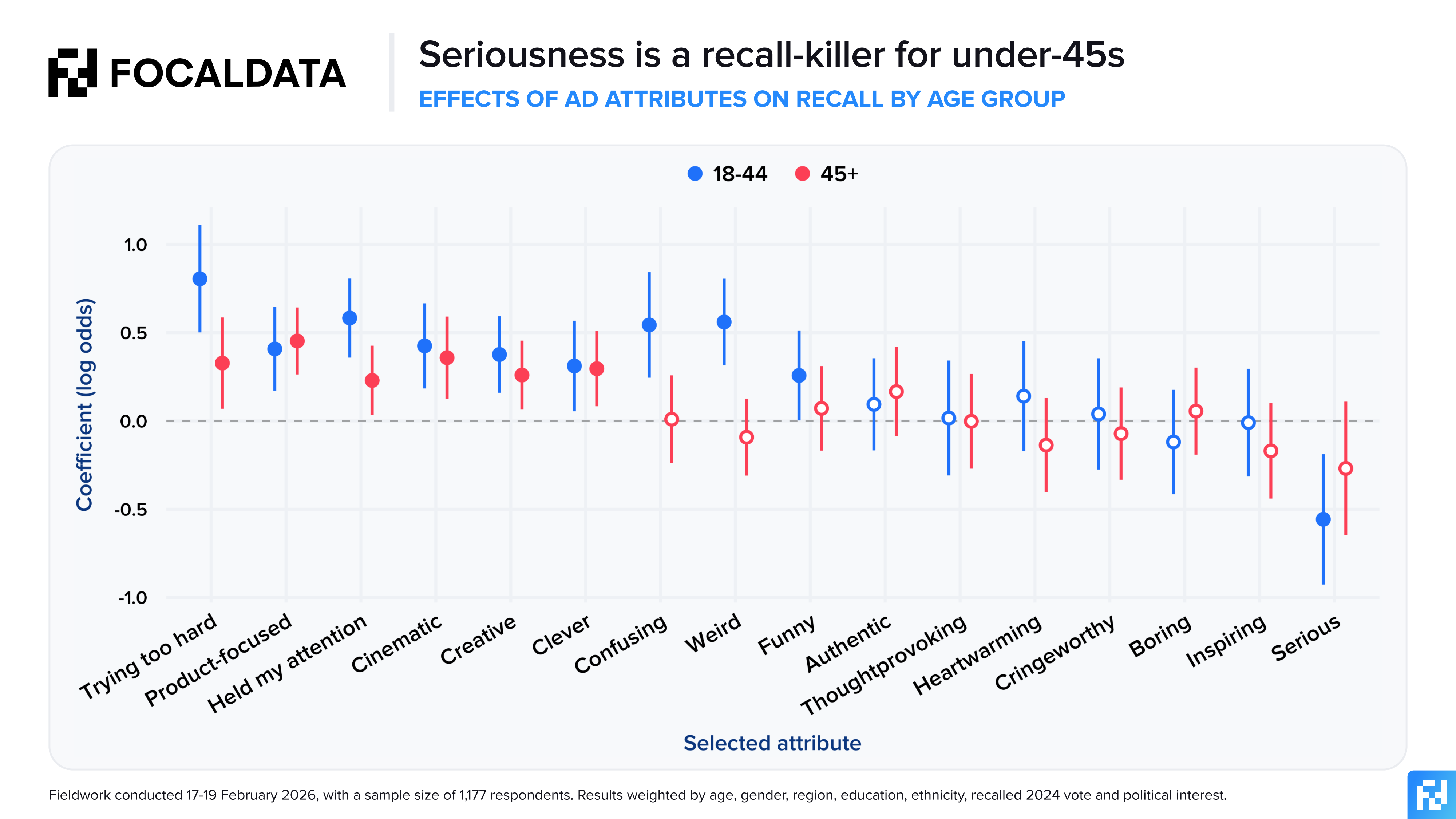
A strange pattern also emerged with these younger respondents, in that negative attributes drove recall. ‘Trying too hard’, ‘weird’ and ‘confusing’ were all among the top five attributes most associated with under 45s remembering an advert. With those aged 45 or over, strange or confusing ads performed no better than any others.
For the younger generation, it seems that anything which breaks through the monotony – for better or worse – will command attention. The social media logic (which has led to the emergence of rage-bait) where any engagement, good or bad, drives clicks and income, is colonising other parts of our culture.
This of course has implications far beyond advertising. The same dynamics that make ‘weird’ ads memorable go some way to explaining why populism has been rising across the world in recent decades. Some of the most successful politicians in recent years have been marmite figures whose ability to command attention is their strongest attribute.
In his excellent essay on populism, the Canadian philosopher Joseph Heath argues that populism is best understood as a strategy which appeals to intuitive (or ‘fast’) thinking over analytical (‘slow’) thinking. In a world of low concentration, falling attention spans and hypermediacy, the question for brands, campaigns and politicians alike may not just be whether people will warm to your message, but whether you can get them to look up from their phones in the first place.